
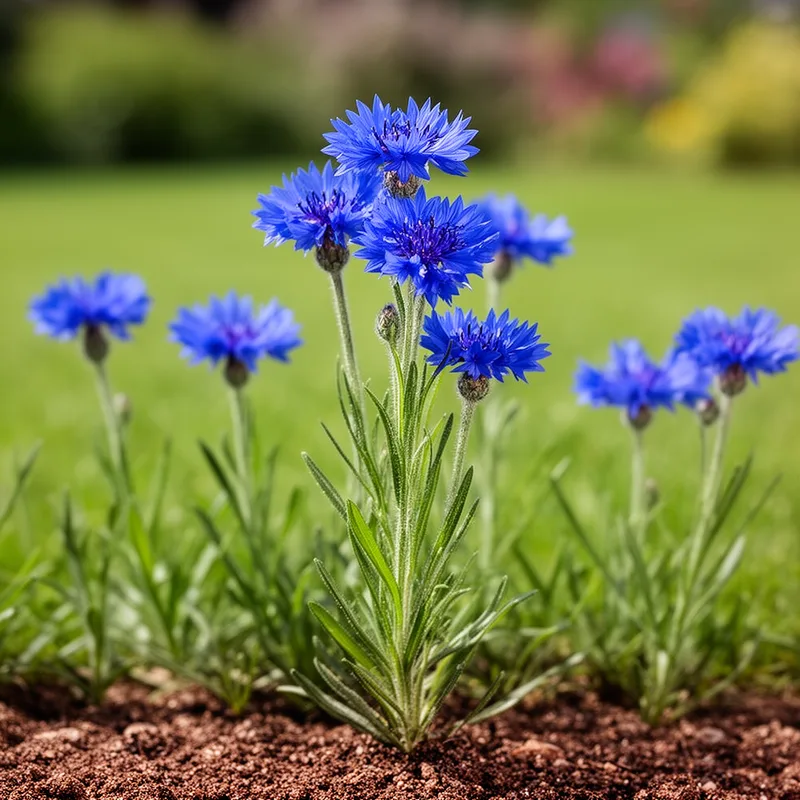
cornflower
 4
3.4
4
3.4

- noun
- /ˈkɔrnˌflaʊər/
- A good-looking young woman sat at the desk: shoulder-length sandy hair, cornflower blue eyes, broad swimmer's shoulders.
- cornflower blue
- poppies and cornflowers
- cornflower flower
Loading YouTube…
Watch on YouTubeSo this one has elong, elong with bergamot Marigold, cornflowers and pink petals dance across a snowy white surface.
- So this one has elong, elong with bergamot Marigold, cornflowers and pink petals dance across a snowy white surface.
Examples
-
A glass vase at the center held blooming cornflowers.
Fiction book (1999) -
Her furrowed cheeks, cornflower-blue eyes, and acid humor drew him back into the slipstream of academe.
Fiction book (1993) -
I find the cornflower the most delightful of flowers.
-
Her cornflower blue eyes looked so happy when she laughed that they nearly seemed to be laughing themselves.
Fiction book (1993) -
Those cornflowers you liked so much.
-
Her arms are full of blue cornflowers, daisies, and roses.
Fiction book (1996) -
Cornflower symbolizes hope.
-
One helmet, overturned, served as a flowerpot and was full of a bobbing mass of blue cornflowers.
Fiction book (1994) -
Lydia had placed cornflowers on the kitchen table and was cooking wozapi, a berry pudding, when her sister entered.
Fiction book (1992) -
In my garden, I planted beautiful cornflowers that bloom in vibrant blue.
Synonyms
A plant with bright blue, pink, purple, or white flowers often grown in gardens and known as cornflower

A plant from Europe and Asia that grows each year with bright blue, purple, pink, or white flowers
A garden plant with bright blue, purple, pink, or white flowers
Compounds


Surface Forms
Morphology
Etymology
Cornflower comes from the old use of corn meaning 'grain', because this bright blue flower often grew in fields of grain. So, a cornflower is literally the 'flower of the grain field', which explains why people find it in farms and gardens.