
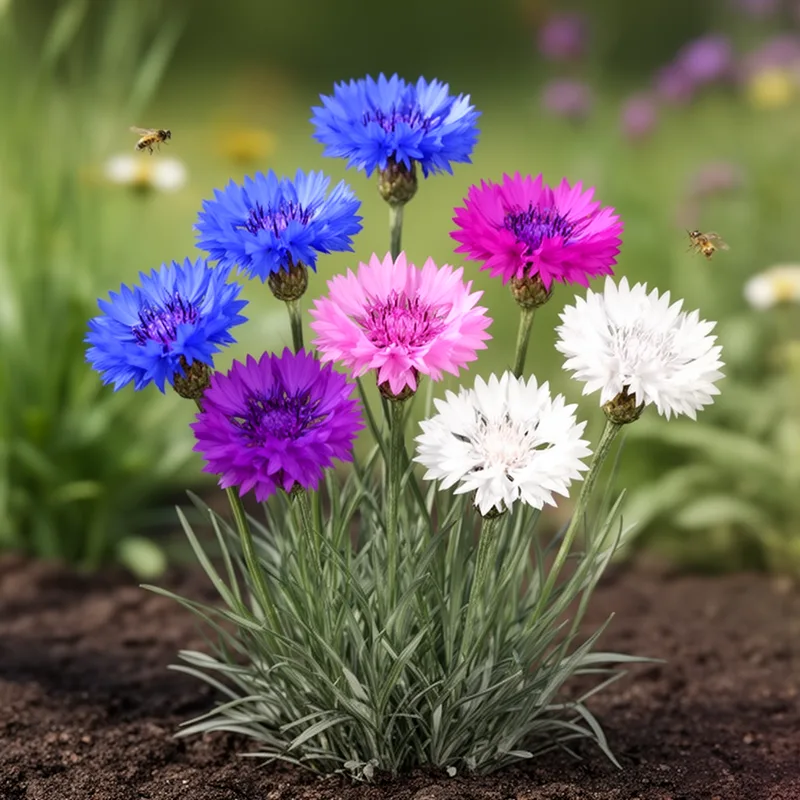
Centaurea cyanus
- noun
- Specialized
- Gardeners often plant Centaurea cyanus for its attractive flowers that attract bees and butterflies.
Examples
-
The vibrant blue Centaurea cyanus bloomed all over the wildflower meadow last summer.
-
A bouquet of Centaurea cyanus brightened the dining table with vivid shades of blue.
-
The Centaurea cyanus blooms beautifully in spring.
-
Look at the beautiful Centaurea cyanus flowers!
-
A bouquet of Centaurea cyanus brightened the dining table with vivid shades of blue.
-
Gardeners often plant Centaurea cyanus for its attractive flowers that attract bees and butterflies.
-
The vibrant blue Centaurea cyanus bloomed all over the wildflower meadow last summer.
Synonyms
 4
3.4
4
3.4

A small plant with bright blue flowers often grown in gardens

A garden plant with bright blue, purple, pink, or white flowers

A plant from Europe and Asia that grows each year with bright blue, purple, pink, or white flowers
Surface Forms
Morphology
This is a Linnaean binomial (genus + species) composed of taxonomic names; if a learner knows 'Centaurea' and 'Cyanus' as plant genera, they can infer this refers to a particular plant species. The construction follows a cross-linguistically familiar scientific naming pattern, so the basic meaning 'a kind of plant (a Centaurea species)' is derivable from the parts even if the common name 'cornflower' is not known.
Etymology
Centaurea cyanus is a Latin name with a simple picture: Centaurea comes from a myth about a centaur who, one story says, used the plant to 'heal' wounds, and cyanus means 'blue', so the name fits the bright 'blue' flower we call the 'cornflower'.