

to cop on
- phrasal verb
- /kɒp ɒn/
- UK
- She finally copped on to what he was really saying.
Loading YouTube…
Watch on YouTubeWe're in the we're in the shop and he cops on me, right.
- We're in the we're in the shop and he cops on me, right.
Examples
-
It took her a while to cop on to the joke everyone was telling.
-
Did you cop on to their plan?
-
He finally copped on when he saw everyone laughing.
-
You need to cop on and take your responsibilities seriously.
-
After a few minutes, he finally copped on that she was upset.
-
It took him a while to cop on to the fact that his friends were joking.
-
She didn't cop on until later that the surprise party was actually for her.
Synonyms

 ∞
1.1
∞
1.1

To suddenly understand something you did not know before
 142
3.9
142
3.9
To notice something that is not obvious
 49
3.7
49
3.7
An idea or fact suddenly becomes clear to someone
 37
3.9
37
3.9
To begin to understand something after a while
 25
7.8
25
7.8
Start to understand what is happening or what to do
 16
7.1
16
7.1
To learn the true facts after not knowing them
 7
7.0
7
7.0
To understand someone tricked you and become more careful
 4
4.9
4
4.9
To begin to understand an idea after not getting it at first
 4
7.4
4
7.4
To finally understand something after some confusion


 1
8.9
1
8.9
To suddenly understand something you did not notice before
 1
7.5
1
7.5
Start to understand something after not understanding it

An idea becomes clear to someone, often suddenly
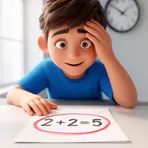
To suddenly understand something you should have noticed earlier
Antonyms


How Aware

Surface Forms
Morphology
cop + on
This is informal British/Irish slang whose idiomatic sense 'to realize' is not a predictable composition of 'cop' + 'on' — 'cop' is ambiguous (commonly a noun 'police officer' and only rarely a verb) and the particle 'on' does not transparently contribute the meaning 'become aware'. A B1 learner who knows the constituent words would therefore be unlikely to infer the intended sense without prior exposure.
Etymology
Cop on may come from old slang where cop meant 'to catch' and on meant 'onto'. The picture is catching an idea in your head, so cop on now means 'to understand' or 'to get it'.