

continental glacier
- noun
- /ˌkɒntɪˈnɛntl ˈɡleɪʃər/
- Specialized
- The melting of the continental glacier contributed to rising sea levels, affecting coastlines around the world.
Examples
-
In North America, these lakes stretched in an arc across the front of the melting continental glacier.
Blog text (15) -
These large continental glaciers, as well as small alpine glaciers, from the tropics to high latitude, accrete mass from snowfall that becomes compressed into ice.
Academic text (2000) -
During the last Ice Age, vast areas of North America were covered by a massive continental glacier that shaped the landscape.
-
Scientists study the movement of continental glaciers to understand historical climate patterns and their impact on the planet.
Synonyms
 96
3.8
96
3.8

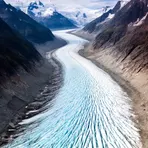
A large body of ice that moves slowly over land where more snow falls than melts
 19
3.4
19
3.4
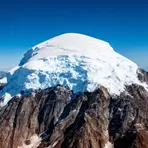
A thick layer of ice and snow that always covers large land areas like the poles or mountain tops
How Large

Surface Forms
Morphology
The meaning 'a very large glacier that covers much of a continent' is directly and compositionally derived from 'continental' (of a continent) + 'glacier' (a mass of ice). This adjective+noun compound follows regular English compounding patterns and is cross-linguistically transparent, so a B1 learner who knows both constituents can reliably infer the MWE meaning even if the term is somewhat technical.
Etymology
Continental glacier paints a simple picture: continental means a whole continent and glacier means a giant sheet of ice that spreads out from the center like a heavy blanket over the land. So, it means 'a very large glacier that covers much of a continent'.