

condensing turbine
- noun
- /kənˈdɛnsɪŋ ˈtɜːrbaɪn/
- Specialized
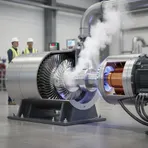
- A condensing turbine enhances power generation by discharging steam at a pressure lower than atmospheric.
Examples
-
The power plant installed a new condensing turbine to improve its efficiency.
-
Operators monitor the pressure closely to ensure the condensing turbine is working optimally.
-
A condensing turbine is often used in large-scale electricity generation where maximizing output is important.
-
The condensing turbine significantly improved the plant's efficiency.
-
Many power plants use a condensing turbine for better performance.
-
The new condensing turbine installed in the facility has greatly increased energy efficiency.
-
In modern power plants, a condensing turbine is essential for maximizing thermal efficiency.
Synonyms
 2
4.6
2
4.6

A machine that uses steam to spin blades and make electricity
Surface Forms
Morphology
The phrase is compositionally built: 'condensing' (causing or related to turning vapor into liquid) modifies 'turbine' (a device), so a B1 learner who knows both words can infer it is a turbine that operates with or causes condensation (e.g., discharges into a condenser). Although technical, the meaning follows a regular modifier+noun pattern and is therefore readily derivable from the constituents.
Etymology
Condensing turbine comes from the machine's simple picture: the turbine is turned by steam and then the steam cools and condenses into water in a condenser, making a low pressure behind the blades. That's why a condensing turbine means a turbine that works with a condenser to pull more steam through and 'make more power'.