
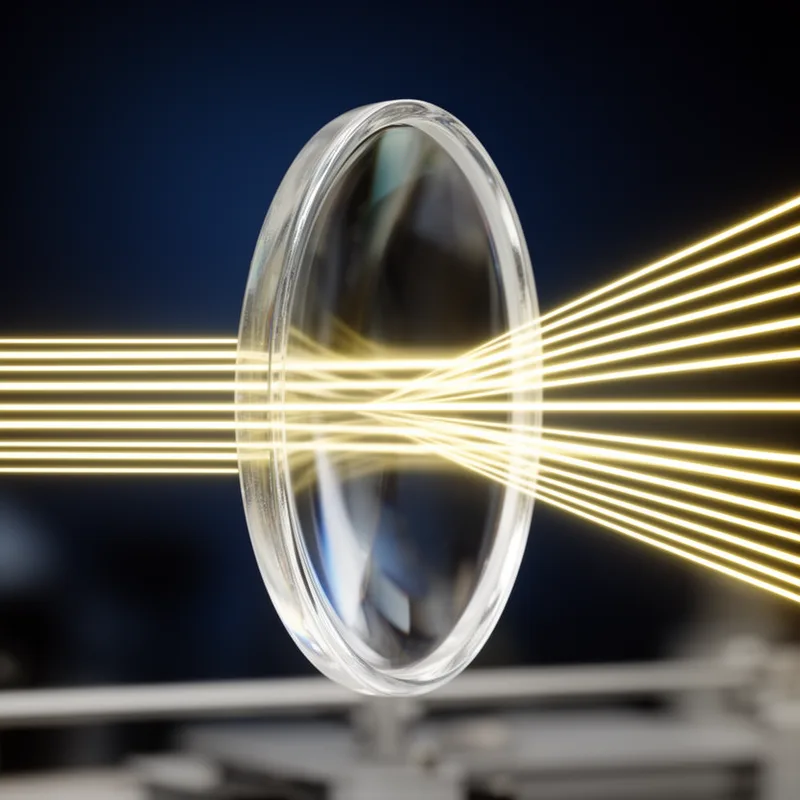
concave lens
- noun
- /ˈkɒn.keɪv lɛnz/
- Specialized
- If you are nearsighted, a concave lens can help you see clearly by diverging the light that enters your eyes.
Examples
-
Or perhaps, like Liberal Arts/Business people whose most recent optics lesson occurred in high school and explained the behavior of light passing through a concave lens, period.
Blog text (7) -
Myopia requires a concave lens, but by FDA rules the center of any lens has to be of a certain thickness to resist breakage.
Academic text (2007) -
A concave lens is used in cameras to focus light and create sharp images.
-
In a physics class, we learned that a concave lens makes parallel rays of light spread apart.
Synonyms

A lens that makes parallel light rays spread out after passing through it
Having one flat side and one side curved inward
Antonyms
How Concave
- Specialized

- Specialized
- Specialized
- Specialized
Surface Forms
Morphology
The meaning is directly compositional: 'concave' describes an inward-curving, bowl-like shape and 'lens' is a light-directing device, so a learner who knows both words can infer a lens with inward-curving surfaces. This shape-based description makes the optical effect (rays diverging) predictable from the constituents and is a cross-linguistically common, non-idiomatic construction, so it is readily understandable to B1 learners who know the parts.
Etymology
The term concave lens comes from concave, meaning 'hollowed in', because the glass is thinner in the middle and curves inward. When light passes through a concave lens the rays are pushed outward or 'spread out', so the lens makes light move apart and is used to help people who are 'nearsighted' see better.

