

to compartmentalize
 24
7.4
24
7.4

- verb
- /kəmˌpɑːrtˈmɛn.tə.laɪz/
- People are very good, you know, at compartmentalizing, at coping, at handling these things.
- compartmentalizes knowledge
- compartmentalizes life
- tend to compartmentalize
Loading YouTube…
Watch on YouTubeOr knowing how to compartmentalize the different versions of yourself.
- Or knowing how to compartmentalize the different versions of yourself.
- And it is, but I think if you compartmentalize it, it's doable to live like that.
- People are very good, you know, at compartmentalizing, at coping, at handling these things.
- I think my childhood made me really good at compartmentalizing feelings and things that felt off.
- But in that is as we compartmentalize, we also can't forget to work through it.
- Interesting thing about his was he saw it, compartmentalized it, never talked about it.
- My therapist, it's called almost sort of like compartmentalizing things.
- All right, so the real key is you've got to learn to compartmentalize.
- All right, O The real key is you've got to learn to compartmentalize.
- I think that some people are just professional and they know how to separate and compartmentalize and some people don't.
- I come from kind of tough, tough minded people, tough people where they could just compartmentalize really well.
- It doesn't matter because their relationship transcends those sorts of compartmentalizing, you know, those sorts of labels.
- So I've been trying to like compartmentalize.
- But I I really just try to compartmentalize that away and keep my eye on the ball.
- And so we compartmentalize these things.
- Where do you, where do you compartmentalize that, that doubt because that doesn't have any room.
Examples
-
I come from kind of tough, tough minded people, tough people where they could just compartmentalize really well.
-
I think my childhood made me really good at compartmentalizing feelings and things that felt off.
-
But I I really just try to compartmentalize that away and keep my eye on the ball.
-
And so we compartmentalize these things.
-
Yes, my species has learned to... you would say compartmentalize... our different experiences.
Fiction book (2002) -
Or knowing how to compartmentalize the different versions of yourself.
-
I think that some people are just professional and they know how to separate and compartmentalize and some people don't.
-
I've been trained to compartmentalize.
-
Cognitive musicologists also tend to compartmentalize their research by culture and subcultures.
Academic text (1993) -
To succeed in her job, she had to compartmentalize her personal feelings from her professional duties.
Synonyms
 680
1.1
680
1.1
To split something into parts or groups
 297
1.9
297
1.9
To break into parts or pieces
 256
4.2
256
4.2
To keep someone or something apart from others
 219
2.7
219
2.7
To keep one thing apart from another so they do not mix
 213
2.8
213
2.8
To separate something into smaller parts to explain or study it
 47
2.6
47
2.6
To divide something into smaller parts
 41
3.2
41
3.2
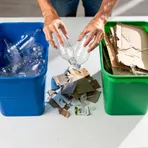
To stop people or objects from touching and mixing
 22
6.8
22
6.8
To separate things or parts for a special purpose
 12
3.5
12
3.5
To divide something into separate parts
 10
4.0
10
4.0
To divide something into parts
 4
3.3
4
3.3
To divide something into separate parts
 3
7.5
3
7.5
To separate something into smaller parts to study it
 2
7.3
2
7.3
Treat two things as separate even if they are linked
 1
9.9
1
9.9
To cut or separate something into parts, often by breaking it


 1
3.9
1
3.9
To divide a space using a wall or screen
 1
7.0
1
7.0
To divide something into smaller parts to make it easier to manage
 1
6.4
1
6.4
To divide an organization into groups that each do their own work

To keep groups or information separate so they do not share knowledge

To divide a space with a wall or curtain to make a new area

To separate things into single items for handling or shipping

To divide a country or city into areas for local government

To separate part of a company to make it an independent business
Antonyms


How Separated

Surface Forms
Morphology
compartmentalize = compartmental (transparent) = compartment + al + ize
Formed by compartment + -al (adjective) + -ize (verb-forming), so the action 'to make or treat as compartmental' is directly derivable.
Etymology
Compartmentalize comes from compartment, which is built from com- meaning 'together' and part meaning 'piece'; a compartment is like a small 'box' or section on a train or in a drawer. So to compartmentalize is to put things into separate 'boxes' or parts to keep them apart.