

to compactify
- verb
- /kəmˈpæktɪfaɪ/
- Specialized
- To optimize our website, we need to compactify the images so that they load faster for users.
Loading YouTube…
Watch on YouTubeOr if you want to hear the technical term, and I just know you want to, they need to be compactified.
- Or if you want to hear the technical term, and I just know you want to, they need to be compactified.
Examples
-
The software was updated to compactify the data files, making them easier to manage.
-
You ask why did nature choose to to compactify some dimensions and not others?
-
And so this is bad because now when you compactify this Euclidian time, this become a compact direction, this is a circle.
-
And, and so I would say that, Jay, your question might be most easily thought of in the concept of compactified dimensions.
-
For instance, consider type II string theory compactified on a circle of radius R.
Academic text (2018) -
This can be motivated, for example, by compactifying the theory on a circle with a Wilson line that breaks the gauge group to a product of U(1)s.
Academic text (2018) -
By applying a new algorithm, we can compactify the database, improving its performance and reducing storage needs.
Synonyms

 325
2.0
325
2.0

To make something smaller in amount or size
 181
2.8
181
2.8
Become less in amount or value
 99
2.5
99
2.5
Make something easier to understand or use
 94
3.7
94
3.7
To press something so it takes less space
 71
2.8
71
2.8
To make something simpler by cutting out details
 50
4.7
50
4.7
To join several things into one whole
 48
3.5
48
3.5
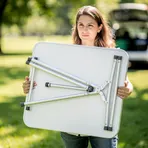
To fold something so it takes less space
 21
4.2
21
4.2
Make something shorter by removing unimportant details
 11
4.4
11
4.4
To press something so it becomes smaller and takes less space
 10
5.1
10
5.1
To make a list or group smaller by removing items over time
 9
4.4
9
4.4
Make something smaller by removing parts you do not need
 9
3.6
9
3.6
To make something shorter while keeping the important parts
 8
4.1
8
4.1
Make something smaller, like a product or living space
 8
4.0
8
4.0
To make something smaller in size or amount
 6
3.0
6
3.0
Bend something, like a map or blanket, so it becomes small for storage
 3
5.5
3
5.5
Make a system or process work better by removing extra parts
 2
4.7
2
4.7
Change lists inside other lists into one list
 2
3.0
2
3.0
To press things so they fit more tightly together
 1
4.0
1
4.0
To make writing or speech shorter and clearer
 1
6.9
1
6.9
To make something more full of buildings, people or material
 1
9.1
1
9.1
To reduce something complex to basic features while ignoring important details


 1
8.4
1
8.4
To make something smaller so it uses less space or time
 1
7.0
1
7.0
To put things together as one group for easier handling
Antonyms

How Compact

Surface Forms
Morphology
Etymology
Compactify comes from the common word compact (which means 'close together' or 'small') plus the ending -ify ('make'). Think of packing a suitcase tightly: to compactify data or a space is to 'make it compact' by removing extra parts so it takes less room and works better.