
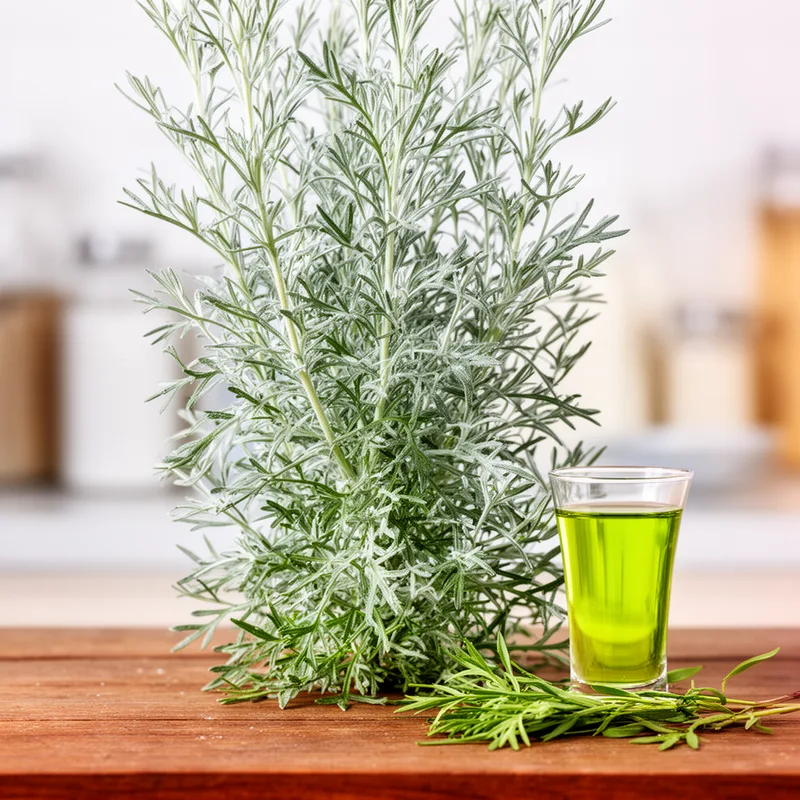
common wormwood
- noun
- /ˈkɑːmən ˈwɜːrmwʊd/
- Many liqueurs, including absinthe, are made from common wormwood.
Examples
-
The leaves of common wormwood have a distinctly bitter flavor.
-
Gardeners often grow common wormwood as an ornamental plant and for its aromatic qualities.
-
Common wormwood has been cultivated for centuries for its medicinal properties and its role in making absinthe.
-
The common wormwood is known for its bitter flavor.
-
The bitter taste of common wormwood is essential in the production of absinthe.
-
Many liqueurs, such as absinthe, derive their unique flavor from common wormwood.
-
The use of common wormwood in cocktails is gaining popularity among mixologists.
Synonyms

 5
8.9
5
8.9

A bitter plant with a strong smell used to make medicine and flavor drinks


 1
9.9
1
9.9
A bitter herb used to make a strong green alcoholic drink

A bitter herb with a strong smell used to make absinthe and for traditional medicine
Surface Forms
Morphology
The phrase combines the adjective 'common' (meaning widespread/usual) with the noun 'wormwood' (an aromatic plant), so the meaning — a type or species of wormwood that is common — is directly derivable from its parts. This straightforward modifier+noun composition is cross-linguistically regular and should be understandable to a B1 learner who knows both constituents.
Etymology
Common wormwood may get its name from an old healing idea: people used wormwood, a name made from worm and wood, to drive out 'worms' from the body. That's why the name refers to a bitter, aromatic herb now used to make absinthe.