
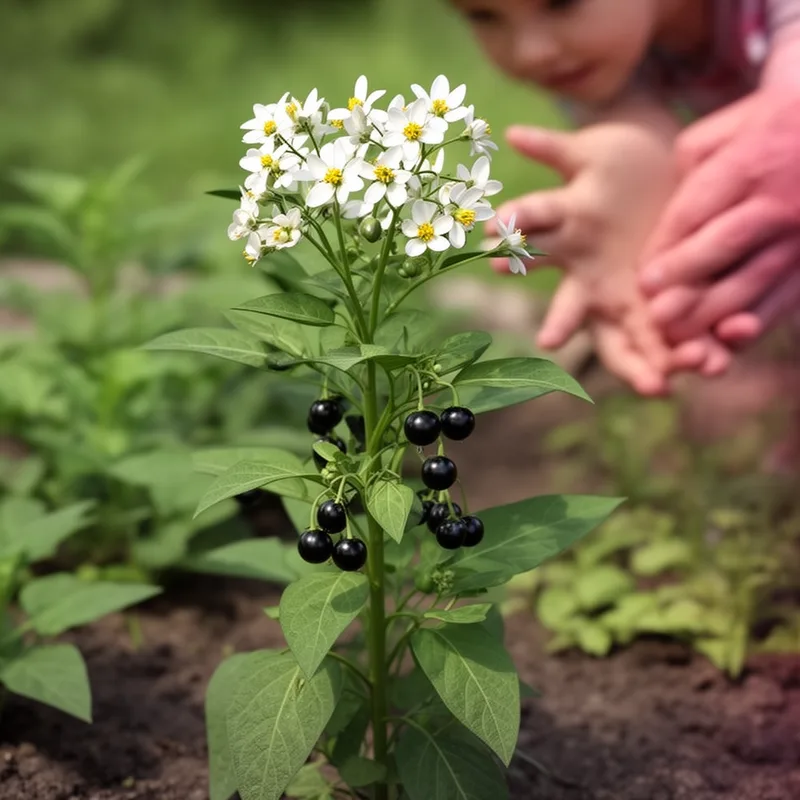
common nightshade
- noun
- /ˈkɑːmən ˈnaɪtʃeɪd/
- UK
- Some varieties of common nightshade have berries that are safe to eat when fully ripe, while others are toxic.
Examples
-
Children should be warned not to eat the berries of the common nightshade plant.
-
The leaves of the common nightshade plant can cause illness if ingested.
-
Common nightshade often grows as a weed in fields and gardens.
-
The common nightshade is often found in gardens.
-
I have seen common nightshades growing near the river.
-
Children should be warned not to eat the berries of the common nightshade plant.
-
Some varieties of common nightshade have berries that are safe to eat when fully ripe, while others are toxic.
Synonyms
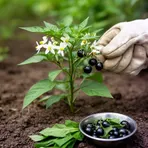
A small plant with white flowers and black berries that can be poisonous or sometimes edible

A plant from Europe and Asia with white flowers, hairy leaves, and black berries that can make people sick

A small plant with black berries and hairy leaves that can make people sick

A plant with white flowers and black berries whose parts can be poisonous
Surface Forms
Morphology
The sense 'a common species or variety of nightshade' follows directly from combining 'common' (ordinary, widespread) with 'nightshade' (a type of plant). This adjectival + noun composition is a transparent, productive pattern in English (and similar in many languages), so a B1 learner who knows both constituents would readily infer the meaning.
Etymology
Common nightshade gets its name from the plant's dark berries and its dangerous effect: the black fruits look like night and the plant was thought to cast a harmful shade. That's why the name is used for a plant that can be 'poisonous' and make people sick.

