

poisonberry
- noun
- /ˈpɔɪzənˌbɛri/
- US
- The children excitedly picked the black berries, unaware that some of them were poisonberries.
Examples
-
Be careful when picking fruit in the wild; some poisonberries can cause severe illness.
-
After tasting a poisonberry, she realized that not all wild fruits were safe to eat.
-
Is it everything you wanted, my little poisonberry?
Synonyms

A plant from Europe and Asia with white flowers, hairy leaves, and black berries that can make people sick
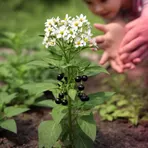
A plant from Europe and Asia with white flowers and black berries that can be poisonous

A plant with white flowers and black berries whose parts can be poisonous
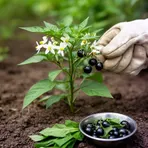
A small plant with white flowers and black berries that can be poisonous or sometimes edible
Surface Forms
Morphology
Etymology
Poisonberry is simply made from poison ('a substance that can harm or kill') and berry ('a small fruit'), so the name is a plain warning that the plant's fruit or leaves can be dangerous.

