
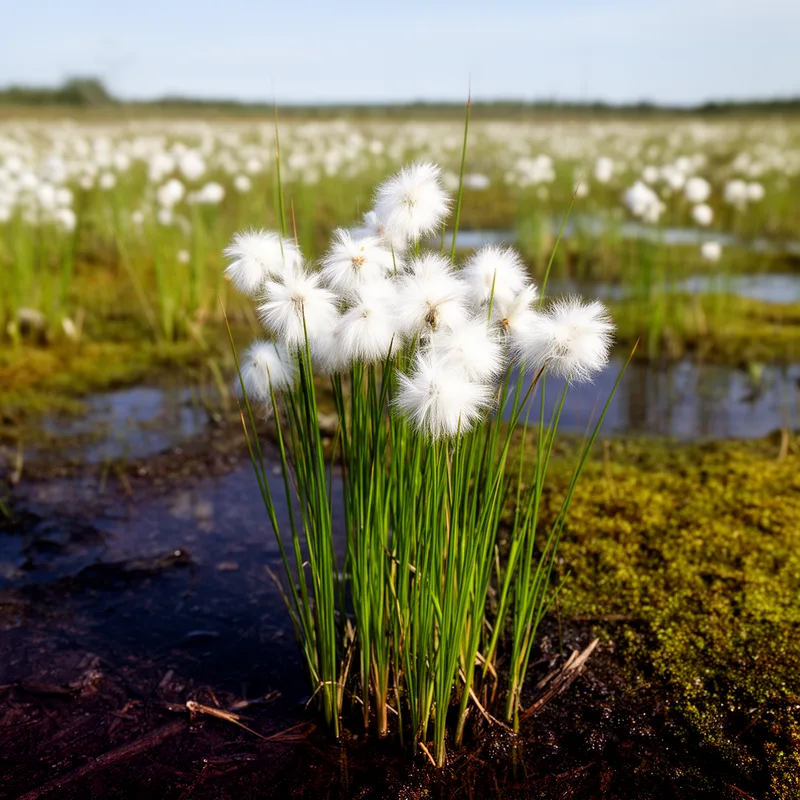
common cotton grass
- noun
- The fluffy heads of common cotton grass are a familiar sight in wetland habitats across northern Europe.
Examples
-
Researchers studied how climate change affects the growth of common cotton grass in peat bogs.
-
The common cotton grass thrives in wetland areas.
-
In summer, the marsh was covered with tufts of common cotton grass swaying in the breeze.
-
Have you seen the common cotton grasses blooming this spring?
-
In summer, the marsh was covered with tufts of common cotton grass swaying in the breeze.
-
Researchers studied how climate change affects the growth of common cotton grass in peat bogs.
-
The fluffy heads of common cotton grass are a familiar sight in wetland habitats across northern Europe.
Synonyms
A plant with white cottony tufts that grows in wet, boggy ground
A plant that grows in bogs with soft white tufts on its stems

A plant that grows in bogs with white fluffy flower heads
Surface Forms
Morphology
The phrase is compositional: 'cotton' modifies 'grass' to indicate a grass with cotton-like, fluffy seed heads and 'common' simply marks it as a widespread/typical species. This attributive use of a material word to signal resemblance is predictable and cross-linguistically common, so a B1 learner who knows the constituents can infer the meaning.
Etymology
Common cotton grass gets its name from how the plant looks. Its white, fluffy seed heads look like cotton, it grows like grass, and 'common' means 'found in many places', so the name helps you picture this marsh plant.

