

common burdock
- noun
- /ˈkɑːmən ˈbɜːrdɒk/
- The seeds of the common burdock easily cling to animal fur and clothing.
Examples
-
Herbalists have long used roots from the common burdock for traditional remedies.
-
Gardeners often remove common burdock because its burs can be a nuisance.
-
The common burdock is often found in gardens.
-
Many people consider common burdocks to be weeds.
-
Gardeners often remove common burdock because its burs can be a nuisance.
-
Herbalists have long used roots from the common burdock for traditional remedies.
-
The seeds of the common burdock easily cling to animal fur and clothing.
Synonyms

 4
8.6
4
8.6

A large plant with wide leaves and small spiky balls that stick to clothing or fur
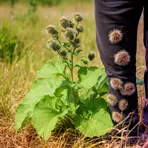
A wild plant with large leaves and round burrs that stick to clothes

A common wild plant with large rough leaves and purple flower heads

A large plant with heart-shaped leaves and a root you can eat for food and medicine

A large plant with broad heart-shaped leaves that people use as food and medicine
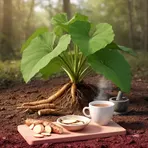
A plant with large heart-shaped leaves and edible roots used in cooking and traditional medicine

A plant in the daisy family with large leaves and sticky round seed heads
Surface Forms
Morphology
The noun phrase is a simple adjectival modification: 'common' (frequently occurring/typical) + 'burdock' (the plant), so the meaning 'a frequently occurring or typical burdock species' is directly derivable from the parts. This follows standard noun phrase composition and cross-linguistic patterns, so a B1 learner who knows both words will understand it.
Etymology
Common burdock is a large plant with big leaves and round seed heads full of burs that cling to animal fur and clothes. Those sticky burs catching on fur or a coat make a clear picture, so the plant's name points to the way its seeds 'stick' to things.