

comic opera
 1
5.0
1
5.0

- noun
- /ˈkɑːmɪk ˈɑːpərə/
- She spent the afternoon watching a comic opera that made everyone laugh with its clever dialogue.
Loading YouTube…
Watch on YouTubeScalia in the majority of Ginsburg and dissent and he decides this could make a very funny comic opera.
- Scalia in the majority of Ginsburg and dissent and he decides this could make a very funny comic opera.
Examples
-
My worldview embraced prostitution, the circus, and comic operas, but not as comparative moral prohibitions.
Fiction book (1990) -
John Wellington Wells, the protagonist of their first successful full-length comic opera, The Sorcerer, may have been able to "prophesy with a wink of his eye, peep with security into futurity."
Academic text (2000) -
We prefer comic opera.
-
...comic opera.
-
"I pretended we were in a teahouse, that the women were geishas in a comic opera, but with no severities and few restrictions.
Fiction book (1990) -
The Golden Belle Restaurant in the Northern Hotel was a comic opera, a western simulation of a sensual empire raised on an old railroad line in Billings, Montana.
Fiction book (1990) -
The purpose of this comic opera on the White Earth Reservation was to scare the tenderfoot scouts and to initiate certain proud and proper senior scouts into the Order of the Arrow.
Fiction book (1990) -
In the later eighteenth century, humorous exploitation of the black surfaced in Charles Dibdin's 1768 comic opera, The Padlock, written to Isaac Bickerstaffe's libretto.
Academic text (1990) -
Many people enjoy the humorous plots and lively music in a comic opera.
-
The performance of the comic opera ended with a joyful celebration among the audience.
Synonyms
 5
7.3
5
7.3
A short, light stage musical with spoken parts and songs that is often funny
 1
5.3
1
5.3
A short, funny musical play with singing and a light story
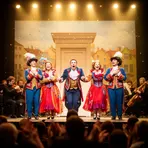
A short funny opera with some spoken words and a happy ending
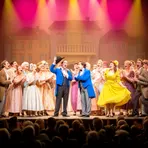
A funny musical play with singing and talking that ends happily
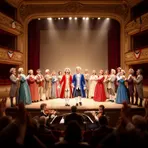
A French musical play with songs, talking parts, and a happy ending
Antonyms

How Light

Surface Forms
Morphology
The meaning 'an opera characterized by a light or humorous tone' is directly and transparently derived from combining 'comic' (humorous) with 'opera' (a staged sung drama); the adjective simply modifies the noun. This compositional pattern is common across languages (e.g., opera comique, ópera cómica) and follows regular English adjective+noun semantics, so a B1 learner who knows both words will readily infer the MWE's meaning.
Etymology
Comic opera is a name made from comic (meaning 'funny') and opera (a musical play). Long ago, writers made lighter operas with spoken lines and happy endings, so people called them comic operas to show they were 'funny' rather than 'serious', which is why today the term means an opera with a light, humorous tone, spoken dialogue, and a happy ending.