
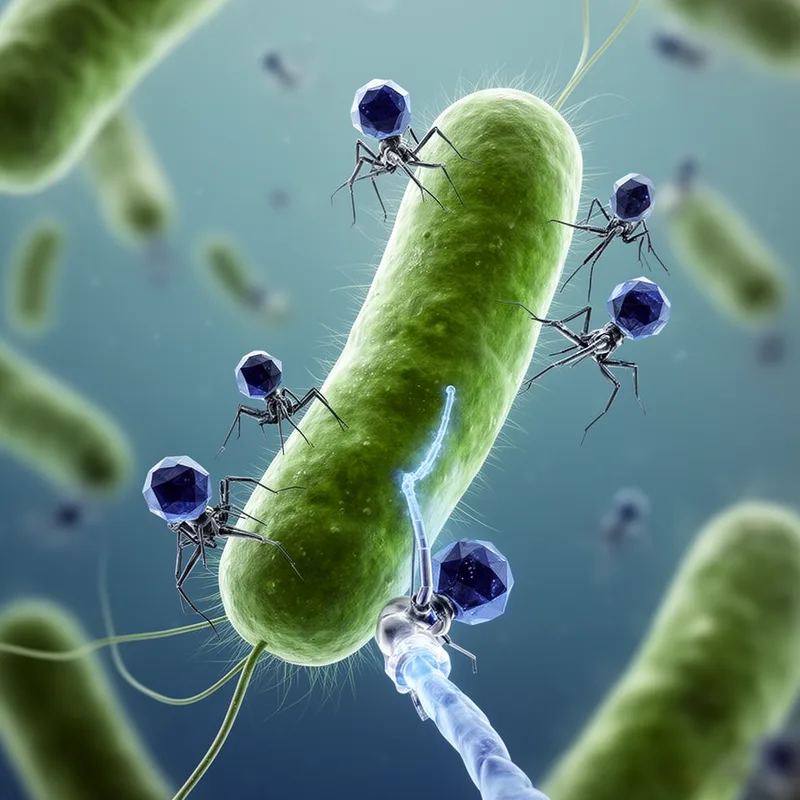
coliphage
- noun
- /ˈkoʊlɪfeɪdʒ/
- Specialized
- The lab confirmed the presence of coliphage in several water samples, indicating contamination.
Examples
-
On Oahu, Hawaii, 32 deep wells were tested for male-specific coliphage (U.S. EPA, 2000). None of the wells were positive.
Academic text (2002) -
Third, over a distance of 50 meters, virus contamination dropped by 15 percent, while total bacteria count decreased by 88 percent, fecal streptococci by 98 percent, and coliphages by 99 percent.
Academic text (2005) -
Four wells were positive for total coliforms, and two were coliphage positive.
Academic text (2002) -
The study found that almost 5 percent of the wells were positive for enteric virus by cell culture, 15 percent were positive for bacterial indicators, 21 percent were positive for coliphage indicators, and 32 percent were positive by RT-PCR.
Academic text (2002) -
Researchers are studying how coliphage can help control bacteria in untreated water.
-
In their experiment, they isolated coliphage from the environment to test its effectiveness against E. coli.
Surface Forms
Morphology
Etymology
The word coliphage comes from coli, the bacterium E. coli, and the part -phage, which means 'to eat'. So a coliphage is like an 'E. coli eater', a virus that attacks that specific bacterium.

