
coefficient of reflection
- noun
- /koʊˈɛfɪʃənt əv rɪˈflɛkʃən/
- Specialized
- The coefficient of reflection determines how much solar energy is bounced off the Earth's surface.
Examples
-
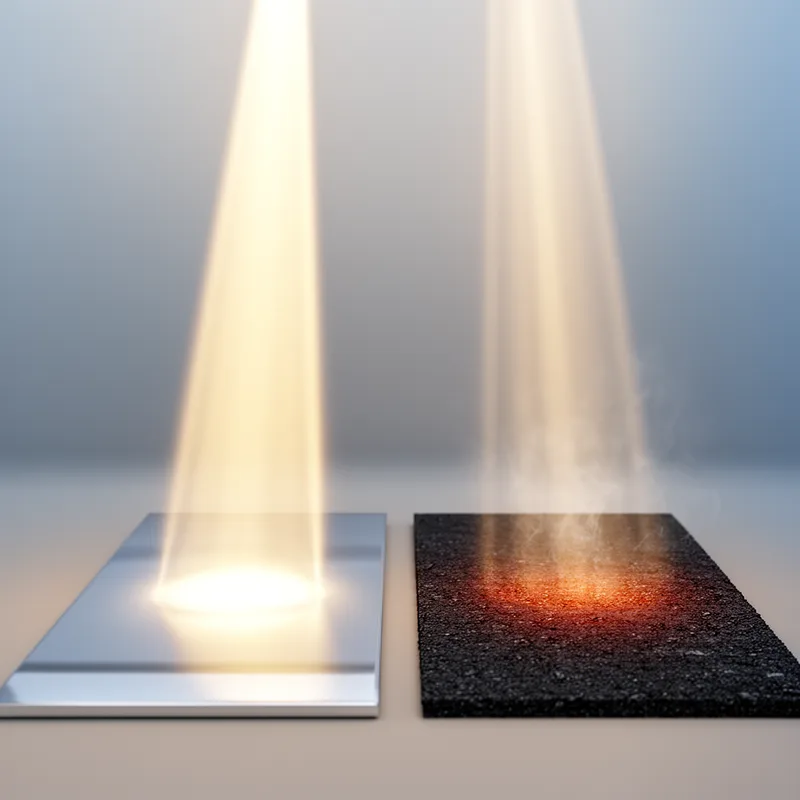
Metal surfaces usually have a high coefficient of reflection compared to darker materials.
-
The coefficient of reflection for glass is quite low.
-
Accurate measurements of the coefficient of reflection are essential in optical engineering.
-
What is the coefficient of reflection for this material?
-
Accurate measurements of the coefficient of reflection are essential in optical engineering.
-
Metal surfaces usually have a high coefficient of reflection compared to darker materials.
-
The coefficient of reflection determines how much solar energy is bounced off the Earth's surface.
Synonyms

 7
9.9
7
9.9

The amount of sunlight a surface reflects, like a planet or moon
 1
6.1
1
6.1
How much light or heat a surface sends back
 1
7.9
1
7.9
The amount of light a surface sends back

Part of light that bounces off a surface, like a mirror

How much light a surface sends back when light hits it
Surface Forms
Morphology
coefficient + of + reflection
The phrase combines 'coefficient' (a numerical measure or constant) with 'reflection' (the return of energy), so the meaning — a numerical fraction describing how much energy is reflected — is directly and compositionally derivable from its parts. This technical, descriptive naming pattern is cross-linguistically common, so a learner who knows the constituents would understand the MWE.
Etymology
The term coefficient of reflection comes from a simple image: imagine shining light or throwing a ball at a wall and seeing how much is sent back. Here coefficient means a 'number' and reflection is what is 'bounced' off a 'surface', so the phrase names the number that shows how much incoming light or energy is reflected.