

coding DNA
- noun
- /ˈkoʊdɪŋ diˈɛnˈeɪ/
- Specialized
- Scientists study coding DNA to understand how genes direct the production of proteins.
Examples
-
Mutations in coding DNA can lead to changes in protein structure and function.
-
Only a small percentage of the human genome is made up of coding DNA.
-
The coding DNA is essential for protein synthesis.
-
Researchers study coding DNAs to understand genetic disorders.
-
Mutations in coding DNA can lead to changes in protein structure and function.
-
Only a small percentage of the human genome is made up of coding DNA.
-
Scientists study coding DNA to understand how genes direct the production of proteins.
Synonyms
 3
9.6
3
9.6

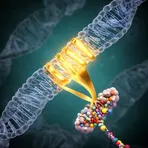
A part of a gene that contains instructions to make a protein

 1
9.9
1
9.9
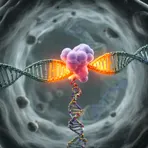
A part of DNA or RNA that makes a protein when cells read it
How Coding

Surface Forms
Morphology
The phrase is compositional: 'coding' modifies 'DNA' to indicate DNA that "codes" or encodes something, so a learner can infer it means DNA that carries code. However, understanding the precise sense — that it is transcribed and translated into proteins — requires specific biological knowledge of the genetic code (and learners may interpret 'coding' in a computing sense), so the relation is only partially transparent to a B1 learner.
Etymology
Coding DNA comes from the idea of a 'code' or 'recipe' because coding means making instructions and DNA is the part of the cell that holds them. These parts of DNA are like a list of letters a cell 'reads' to make proteins, so they are the DNA that 'codes' for proteins.