
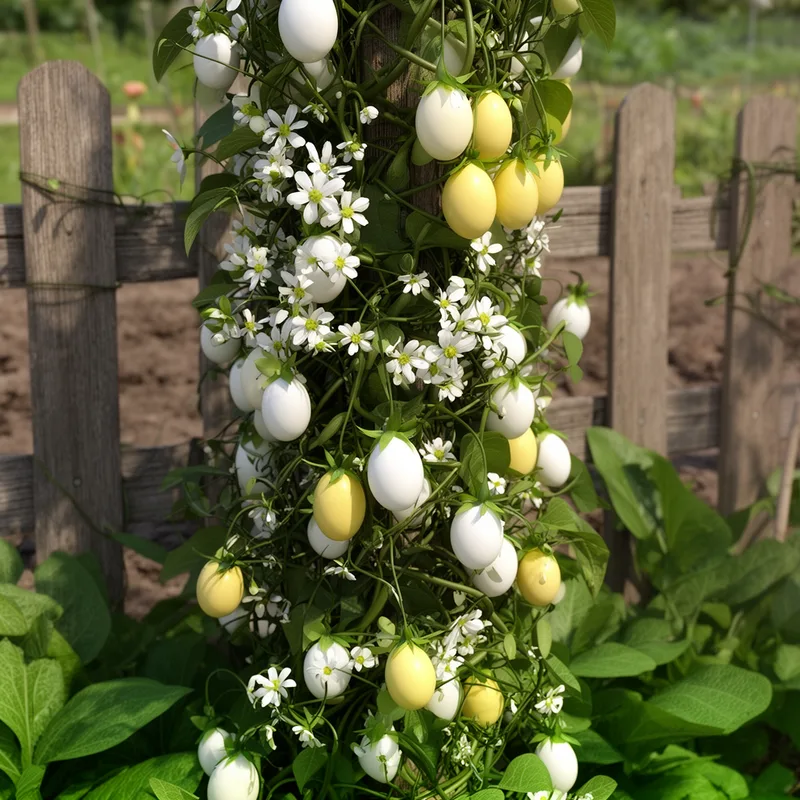
cock's eggs
- noun
- UK
- The garden was taken over by the invasive cock's eggs, which produced unusual yellow fruit.
Examples
-
We examined the white blossoms of the cock's eggs vine growing along the fence.
-
Local farmers warned that cock's eggs could easily spread and choke out other plants.
-
I found some cock's eggs growing in my garden.
-
Have you ever seen cock's eggs in the wild?
-
The garden was taken over by the invasive cock's eggs, which produced unusual yellow fruit.
-
We examined the white blossoms of the cock's eggs vine growing along the fence.
-
Local farmers warned that cock's eggs could easily spread and choke out other plants.
Synonyms

A wild vine from Argentina with white flowers and small egg-shaped white or yellow berries that are not edible
A climbing weed plant from Argentina with single white flowers and egg-shaped white or yellow fruit
Surface Forms
Morphology
cock's + eggs
The phrase literally combines 'cock's' (rooster's) + 'eggs', so a B1 learner would likely infer something to do with eggs or egg‑shaped items from the constituents. However the actual referent is a specific plant species named for its egg‑shaped fruit, and that specific botanical meaning (a weedy vine) is not fully predictable from the words alone. Because there is a visible link to the constituents but the precise sense requires prior knowledge, the item is best judged semi‑transparent.
Etymology
Cock's eggs may come from the vine's small, white, egg-shaped fruits that really look like tiny eggs, giving the odd picture of a cock (a male chicken) with eggs. That's why the name now refers to a vine with white or yellow 'fruit'.

