
Salpichroa rhomboidea
- noun
- Specialized
- Salpichroa rhomboidea produces solitary white flowers that attract various pollinators in the garden.
Examples
-
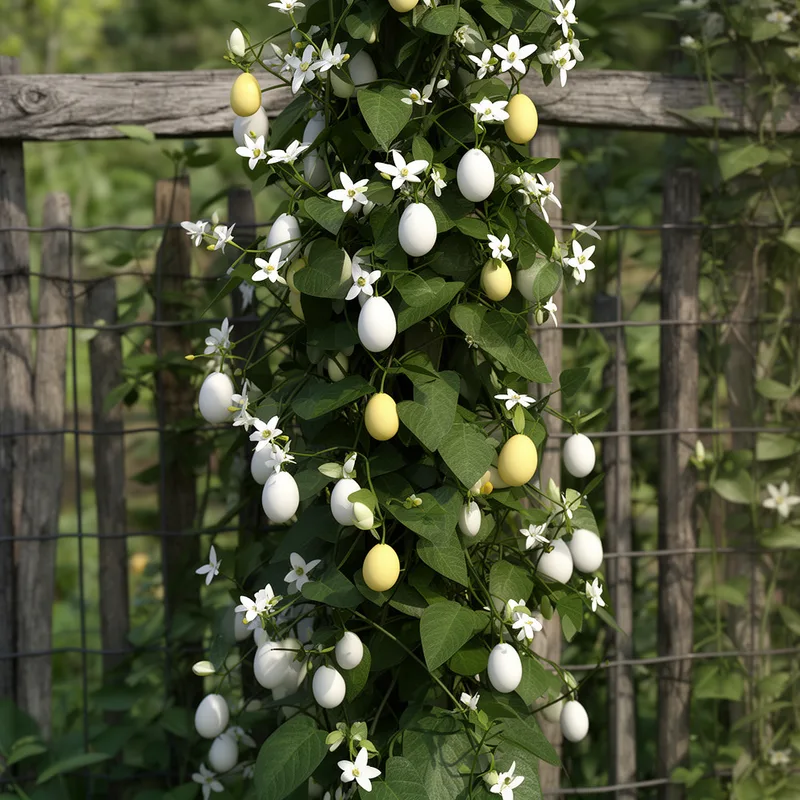
The white berries of Salpichroa rhomboidea stand out against its dark green foliage.
-
The Salpichroa rhomboidea is often found in disturbed areas.
-
Salpichroa rhomboidea is known for its rapid growth and invasive tendencies in some regions.
-
Gardeners often struggle to control the spread of Salpichroa rhomboidea in their yards.
-
Have you seen the Salpichroa rhomboidea in bloom?
-
The egg-shaped fruit of Salpichroa rhomboidea can be either white or yellow and is a unique feature of the plant.
-
In Argentina, Salpichroa rhomboidea can often be found creeping along fences and walls.
Synonyms

A wild vine from Argentina with white flowers and small egg-shaped white or yellow berries that are not edible
A wild climbing plant with white flowers and egg-shaped white or yellow fruit
Surface Forms
Morphology
Salpichroa + rhomboidea
This is a scientific Latin binomial (a species name) and functions as a proper noun rather than a compositional English phrase; its meaning (a particular weedy vine) is not derivable from everyday English knowledge. Even if a learner recognised 'Salpichroa' as a plant term, the second element is Latin and unfamiliar, and Latin taxonomic forms and endings are not predictable for a B1 learner, so the expression is not transparently interpretable.
Etymology
Salpichroa rhomboidea may come from old Greek words that describe the plant's look: Salpichroa suggests a 'trumpet' shape for the small white flowers and rhomboidea means 'diamond-shaped', like the leaves or fruit. So the name is a simple picture that helps people remember and identify the plant.

