

coagulation
 5
6.9
5
6.9

- noun
- /koʊˌæɡjʊˈleɪʃən/
- Specialized
- The doctor explained that coagulation is essential for stopping bleeding after an injury.
- blood coagulation
- coagulation test
- coagulation cascade
Examples
-
After the accident, the rapid coagulation of his blood helped prevent excessive blood loss.
-
Because scissors tonsillectomy allows for simultaneous dissection and coagulation, the degree of tissue trauma and burning is lessened.
Academic text (2002) -
A review of her coagulation screen revealed that her bleeding parameters were normal.
Academic text (2008) -
Most of the blood began coagulation before exsanguination.
-
Some patients experience minimal inflammation and excellent coagulation, while others do not.
Academic text (2004) -
His full blood count, urea and electrolytes, and coagulation screen were normal.
Academic text (2007) -
For adenoidectomy in children, the Wand is set to power level 7 and coagulation setting 3.
Academic text (2004) -
Matt's serum protein C level, a marker of the coagulation system, was also significantly low.
Academic text (2005) -
The three surgical effects of the laser beam are tissue cutting, tissue coagulation, and tissue vaporization.
Academic text (1995) -
Dabigatran acts on the coagulation cascade by directly inhibiting the action of thrombin.
Academic text (2014)
Synonyms
 18
3.5
18
3.5
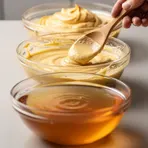
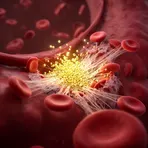
Blood becomes thick and forms lumps to stop bleeding
 4
4.6
4
4.6
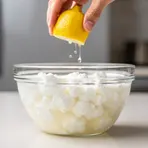
The process or result of something becoming more dense
 3
4.5
3
4.5
The forming of small solid lumps in a liquid like milk or cream


 1
9.4
1
9.4
Small bits in a liquid stick together to form soft clumps

A liquid that becomes a soft solid like jelly
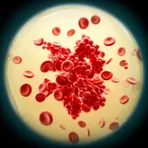
Small cells or particles sticking together to form clumps in a liquid like blood
Antonyms
Compounds

How Thick

Surface Forms
Morphology
Etymology
Coagulation comes from the Latin parts co- 'together' and agere 'to drive', the same root as agent. So coagulation is when things are 'brought together' into a thick mass or clot, like blood clotting or milk forming curds for cheese.