

clotting
 18
3.5
18
3.5

- noun
- /ˈklɑːtɪŋ/
- Specialized
- The indicators include blood clotting and oxidation of LDL cholesterol—the artery-clogging form.
- blood clotting
- clotting factor
- clotting disorders
Loading YouTube…
Watch on YouTubeWhat are some things that impact clotting and or excessive bleeding?
- What are some things that impact clotting and or excessive bleeding?
- So if you're stopping the blood clotting, you can cause massive bleeds to patients.
- when I was postpartum, I was getting some blood clotting. So when I go to the bathroom,
- And so anybody with any form of blood clotting problems cannot take things like birth control.
- Your blood work came in, You have a blood clotting condition.
Examples
-
No blood flow, no clotting, no healing.
-
The risks are undoubtedly greater in people who have used aspirin, ibuprofen, or other medicines that alter blood clotting abilities.
Academic text (1996) -
Your blood work came in, You have a blood clotting condition.
-
And so anybody with any form of blood clotting problems cannot take things like birth control.
-
So in fact, like these other functions, blood clotting is built upon a homeostatic mechanism.
-
Such clotting, she explains, contributes to clogged arteries and eventually to heart attacks.
Academic text (1996) -
Also, calcium is important in regulating blood clotting, thereby resulting in a reduced risk for excessive bleeding during delivery.
Blog text (10) -
Taylor was also diagnosed with a clotting disorder in which her blood clots excessively, causing a lack of circulation.
Blog text (21) -
Calcium has a large role in blood clotting, as well as maintaining neuromuscular excitabilities and in the acid-base equilibrium of the body.
Fiction book (1995) -
The doctor explained that clotting is essential for stopping bleeding during an injury.
Synonyms
 5
6.9
5
6.9
A change when a liquid becomes thick and forms clots, like blood or milk
 2
3.6
2
3.6
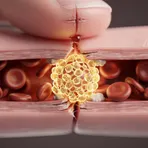
A process in which blood becomes a thick mass to stop bleeding


 1
3.9
1
3.9
Blood changes from liquid into a thick mass that forms a clot
Antonyms

Compounds

- Specialized
The time a blood sample takes to stop flowing so doctors can check bleeding problems
Surface Forms
Morphology
Etymology
The word clotting comes from the old English word clot, which meant 'lump'. So clotting is the process of a liquid forming lumps, like when blood turns thick to help stop bleeding.