
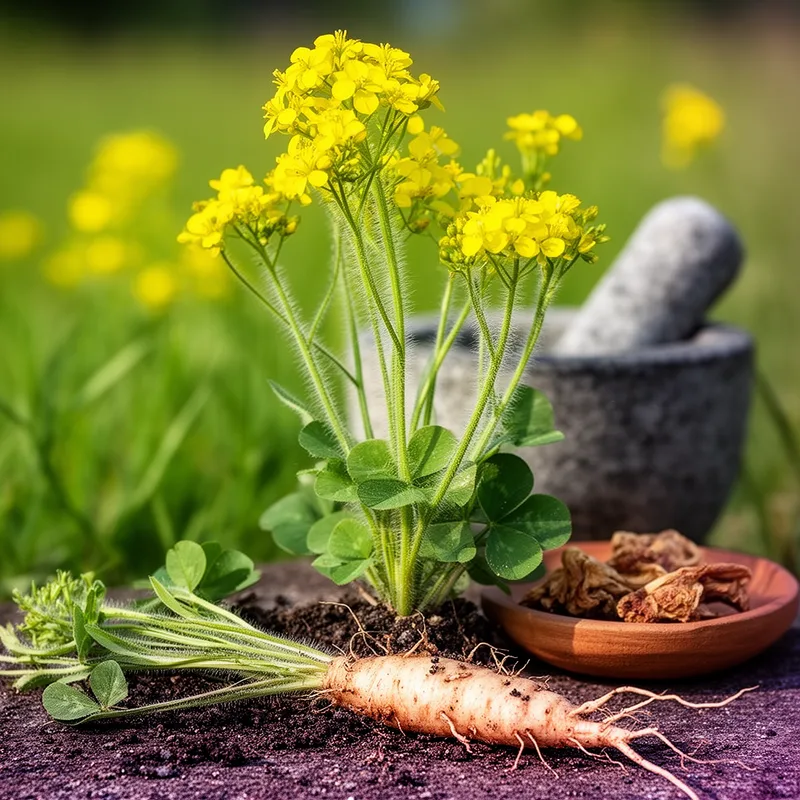
cloveroot
- noun
- Literature
- The astringent root of the cloveroot was once used in various herbal medicines.
Examples
-
The fields were dotted with patches of cloveroot in full bloom.
-
Traditional remedies sometimes called for dried cloveroot as an ingredient.
-
Early herbalists believed that cloveroot could be used to treat digestive issues.
-
The cloveroot has many medicinal properties.
-
I found a cloveroot in the garden yesterday.
-
Early herbalists believed that cloveroot could be used to treat digestive issues.
-
Traditional remedies sometimes called for dried cloveroot as an ingredient.
Synonyms
A hairy plant from Europe and Asia with small yellow flowers and a root used in old medicines

A small hairy plant from Europe and Asia with yellow flowers and a root once used in medicine

A hairy wild plant with small yellow flowers and a bitter root used long ago as medicine

A small wild plant with hairy stems and yellow flowers that grows in shady woods
Surface Forms
Morphology
Etymology
Cloveroot can be remembered as clover + root: people named the plant this because its small yellow flowers and leaves look a little like clover and its strong, bitter root was used in old medicine. So, the name points to a plant that looks like clover and is known for its medicinal root.

