

clover-root
- noun
- Literature
- The herbalist recommended using clover-root for its traditional astringent properties.
Examples
-
In early spring, clover-root produces clusters of small yellow flowers.
-
Historically, clover-root was a common remedy in some European folk medicines.
-
The clover-root is effective.
-
Is clover-root good for health?
-
The herbalist recommended using clover-root for its astringent properties in traditional medicine.
-
Historically, clover-root was valued for treating various ailments in European folk medicine.
-
In traditional practices, clover-root was often used to create herbal remedies.
Synonyms
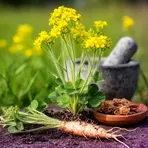
A hairy plant from Europe and Asia with small yellow flowers and a root used long ago in medicine

A small hairy plant from Europe and Asia with yellow flowers and a root once used in medicine

A hairy wild plant with small yellow flowers and a bitter root used long ago as medicine

A small wild plant with hairy stems and yellow flowers that grows in shady woods
Surface Forms
Morphology
Etymology
Clover-root is a simple name: clover is the familiar meadow plant and root means the part under the ground. People long ago used the plant's root as a medicine because it had a 'drying' quality, often called 'astringent', so the name points to that traditional healing use.

