

to clock off
 1
5.0
1
5.0

- phrasal verb
- UK
- Once I clock off, I like to relax with a good book.
Examples
-
You can clock off at some point, you kno
-
You've just clocked off from a hard day's work.
-
I gotta plant her before I clock off!
-
I clock on, do the hard yards, and then I clock off.
-
As long as that lot gets sorted before you clock off.
-
What I think about when I'm working is, go in, clock on, do the job, clock off, go home.
-
Stephen, can you do the inventory and then you can clock off early?
-
So, what time are you clocking off?
-
This is me clocking off.
-
After finishing my tasks, I can finally clock off for the day.
Synonyms
 246
2.1
246
2.1
To finish work at the end of your shift
 11
3.4
11
3.4
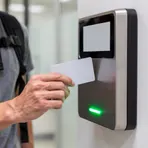
To record the time you leave work, often using a machine
 6
3.9
6
3.9
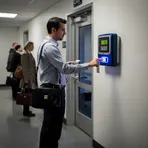
To record when you finish work using a time clock
Antonyms

Surface Forms
Morphology
The meaning 'to record the time when you leave work' is directly compositional from 'clock' (to record time) plus 'off' (indicating finishing or leaving), following the common English verb+particle pattern. This is a predictable phrasal-verb meaning and has clear parallels in other languages (e.g. 'clock out'), so a B1 learner who knows both constituents would likely infer the sense.
Etymology
Clock off comes from workplaces where people used a mechanical time clock to record hours. At the end of the day they would stamp a card in the clock and the work was finished or off, so the phrase came to mean 'to record the time when you leave work'.