
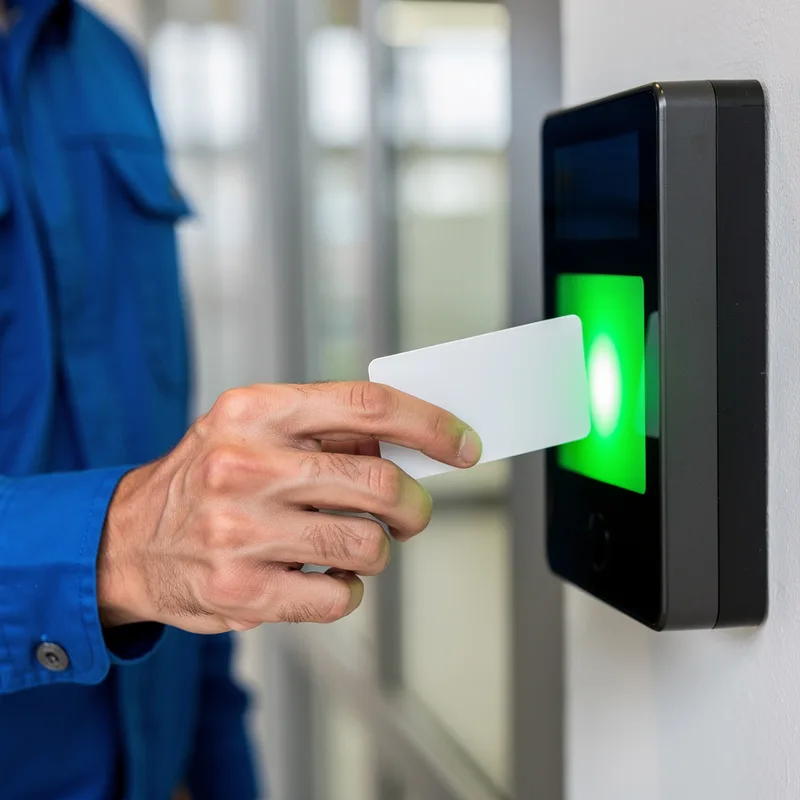
to clock in
 10
3.2
10
3.2

- phrasal verb
- /klɑk ɪn/
- After my lunch break, I need to clock in again to officially resume my shift.
- clock in this morning
- clocked in at 5:30 A.M.
- clocked in 2,499 hours
Loading YouTube…
Watch on YouTubeEmployees clock in a little late, they clock out a little early, and they do the bare minimum to maintain employment.
- Employees clock in a little late, they clock out a little early, and they do the bare minimum to maintain employment.
- Like, am I doing anything that means anything or am I just like showing up to work each day, like clocking in?
Examples
-
I've always looked at it as almost working at a factory because you go to work, you clock in, and you do your time.
Blog text (11) -
- Have you even clocked in yet?
-
And l forgot to clock in after my break.
-
From now on, everyone needs to clock in and out.
-
You ready to clock in?
-
- Wait here, I'm gonna go clock in.
-
I assume with most jobs, any time you clock in after the designated time, you are late.
Blog text (10) -
All right, gentlemen, the day shift is clocking in.
-
We have to clock in and out for smokes at my job.
Blog text (2) -
Made it to work and clocked in at about 9:30 a.m.
Blog text (23)
Synonyms
 5
3.5
5
3.5
Record the time you arrive at work using a time clock or electronic system

Record the time you arrive at work with a card or badge
Antonyms
How Automated
- Specialized
 42
3.0
5
3.5
10
3.2
603
2.8
42
3.0
5
3.5
10
3.2
603
2.8
Surface Forms
Morphology
The meaning 'to record the time you arrive at work' follows directly from combining 'clock' (to record time) with the particle 'in' (indicating entry/arrival), so the sense is compositionally predictable. This verb+particle pattern is common and mirrors equivalent constructions in many languages, so a B1 learner who knows the constituents would very likely infer the meaning.
Etymology
The phrasal verb clock in comes from old factories where workers used a time clock machine that punched a paper card when they arrived. To clock in was to put your card into the clock so it marked the time, and that's why today it means 'to record the time you arrive at work'.