
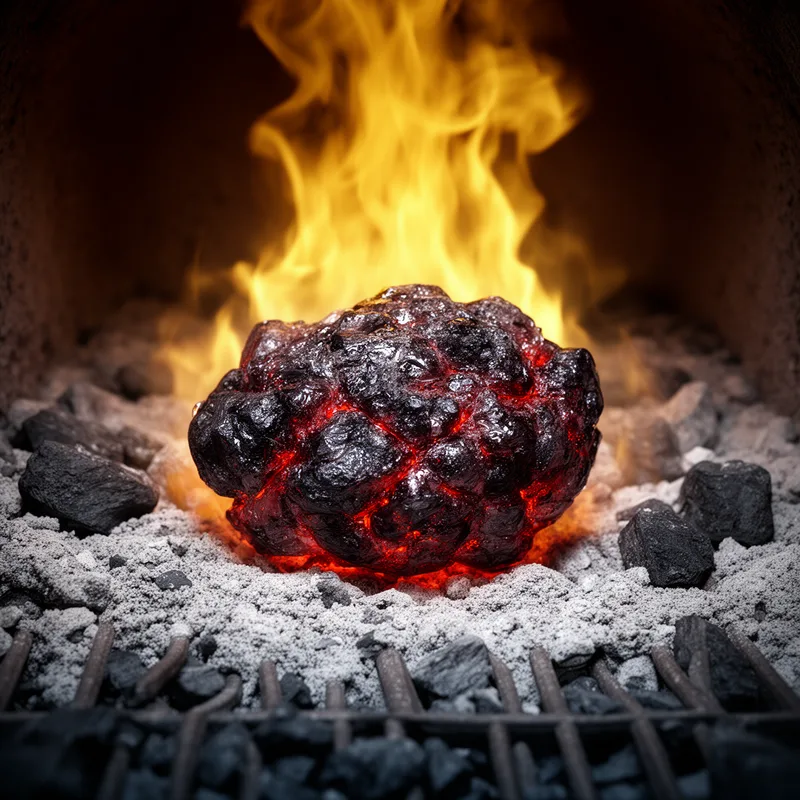
to clinker
- verb
- /ˈklɪŋkər/
- Specialized
- Low-quality coal can clinker easily when used in industrial boilers.
Examples
-
The firewood clinkered after burning for several hours.
-
If the temperature is not controlled, the furnace ash may clinker and damage the equipment.
-
Operators must be alert to prevent fuel from clinkering during the combustion process.
-
Coal can clinker if it is burned too hot.
-
If the furnace temperature is too high, the coal can easily clinker, leading to potential damage.
-
Industrial boilers often clinker when using poor-quality coal at elevated temperatures.
-
To avoid clinkering, operators should monitor the combustion temperature carefully.
Compounds

- Specialized
A light concrete block used for building, made from waste from burned coal instead of stone

How Burnt


Surface Forms
Etymology
Clinker as a verb comes from the same root for those hard lumps, so to clinker is to 'become hard and fused' when ash or fuel melts and sticks together. That's why we say fuel can clinker in a furnace — it forms hard, damaging lumps.