
cleidocranial


 1
9.9
- adjective
- /ˌkleɪdoʊˈkreɪniəl/
- Specialized
- The doctor noted several cleidocranial abnormalities on the X-ray.
Examples
-
Researchers are studying cleidocranial conditions to better understand bone development.
-
A rare genetic disorder can cause cleidocranial dysplasia in children.
-
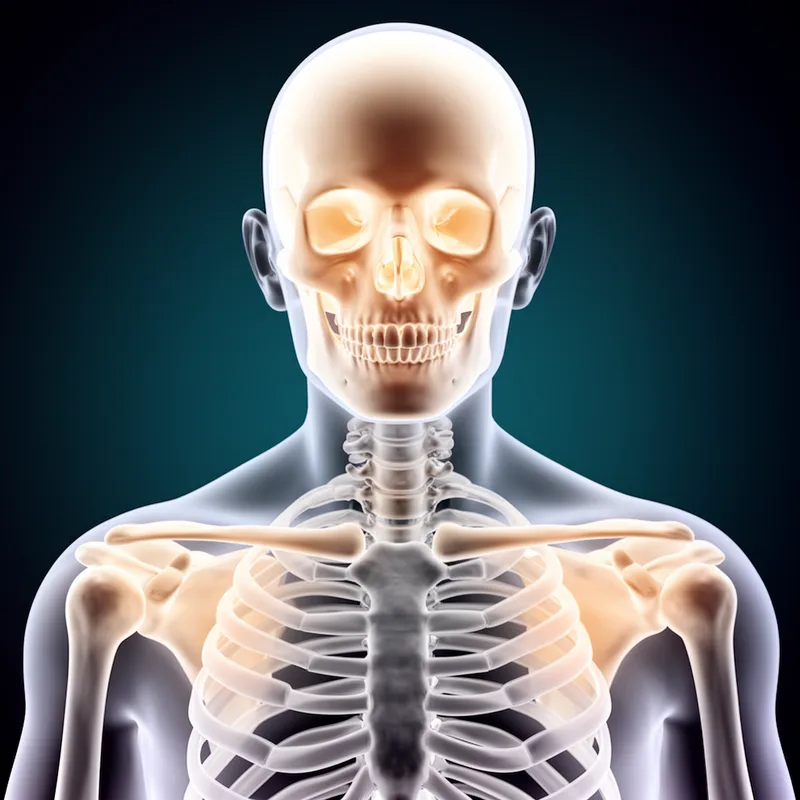
The cleidocranial syndrome affects the development of the collarbone.
-
Many children with cleidocranial dysostosis have dental issues.
-
The doctor explained that cleidocranial disorders affect the development of both the clavicle and the skull.
-
She studied cleidocranial dysplasia to understand its impact on patients' bone structures.
-
The children's cleidocranial condition made their bones develop differently compared to others.
Surface Forms
Morphology
Etymology
The word cleidocranial comes from Greek parts cleido- meaning 'clavicle' or 'collarbone' and cranial meaning 'skull', from cranium. So, it describes something that relates to both the collarbone and the skull.