
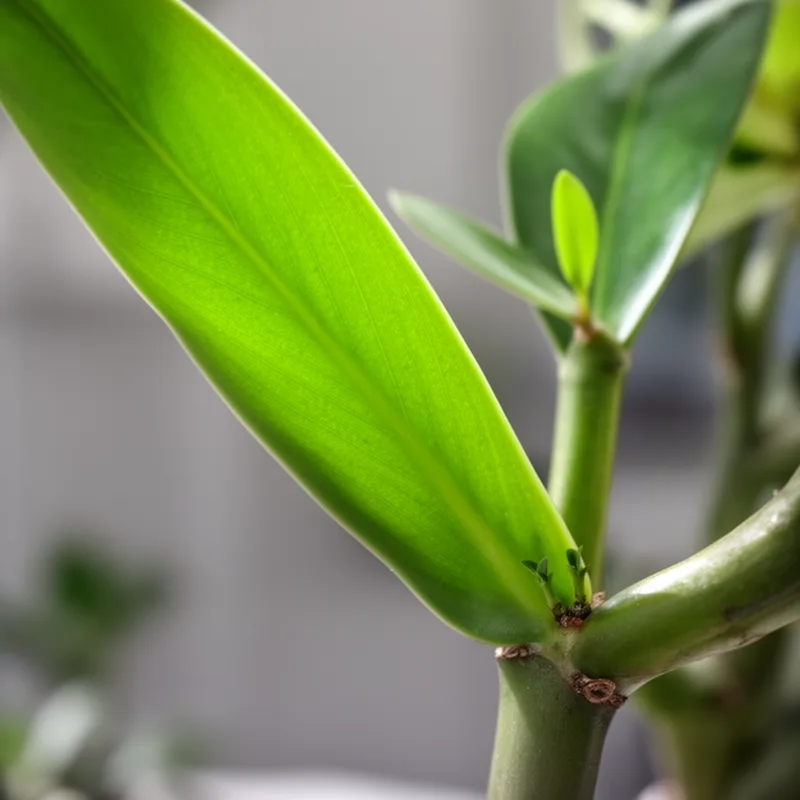
cladophyll
- noun
- /ˈklædəˌfɪl/
- Specialized
- The cladophyll of the asparagus plant is often mistaken for a true leaf.
Examples
-
Some desert plants use a cladophyll to carry out photosynthesis instead of ordinary leaves.
-
The cladophyll of the plant serves as its primary photosynthetic structure.
-
In botany class, we studied the structure of a cladophyll in comparison to a typical leaf.
-
Some species of cacti have cladophylls instead of traditional leaves.
-
In some cacti, the thick green parts known as cladophylls perform the photosynthesis usually done by leaves.
-
The plant's cladophylls resemble leaves but are actually modified stems that help conserve water.
-
During dry seasons, the cladophylls of the succulent store moisture, allowing the plant to survive.
Synonyms

A flat stem that looks and works like a leaf

A flat stem that looks like a leaf and makes food for the plant

A flat stem that looks like a leaf and makes food for the plant, for example in cactus plants
Surface Forms
Morphology
cladophyll = clado + phyll
The classical combining forms suggest something like a branch-leaf or leaflike branch, but the exact botanical meaning of a flattened stem that functions as a leaf is specialized.
Etymology
Cladophyll comes from the Greek parts clado- and -phyll, which mean 'branch' and 'leaf'. So a cladophyll is like a 'branch' that looks and acts like a 'leaf', helping the plant to make food.

