
clade
 3
8.7
3
8.7

- noun
- /kleɪd/
- Specialized
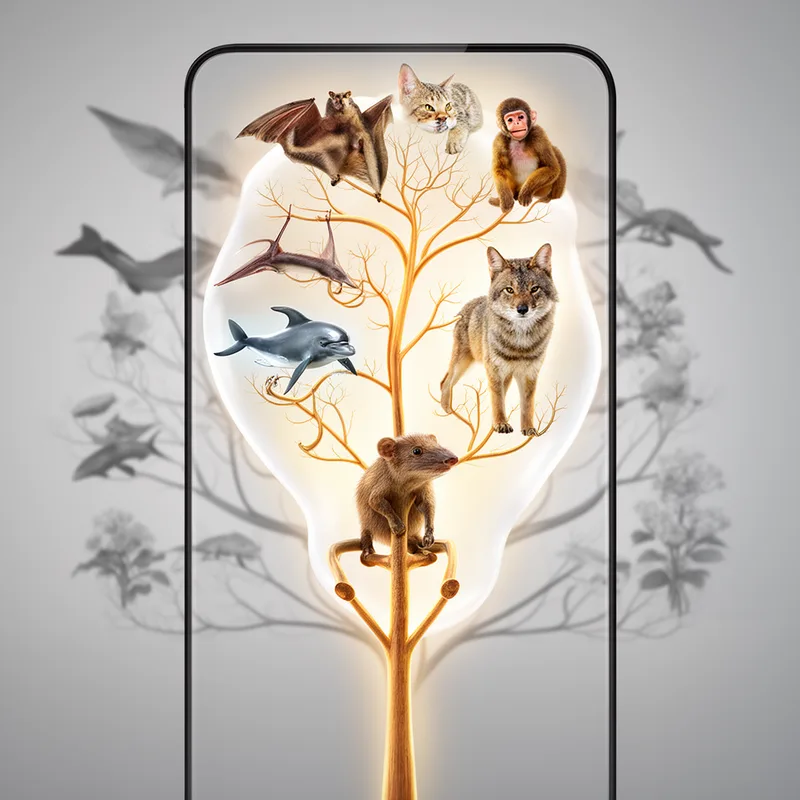
- The research revealed that multiple species belong to the same clade, tracing their lineage back to a common ancestor.
- virus clade
- clade 2.3.4
- African clade
Examples
-
As seen in the tree, there were no specific clades occupied by the viruses isolated from vaccinated patients.
Academic text (2016) -
In particular, the placement of C. rostralis in this clade deviates substantially from previous observations and assignments.
Academic text (2018) -
Example: The most common clade in the USA and Western Europe is clade B.
Academic text (1999) -
The Central and Western African clades and the four distinct lineages are indicated.
Academic text (2014) -
Analysis of the HIV clade variants in the geographical locations of the cohort to be immunized.
Academic text (1999) -
We inferred a widespread eastern Australian clade within Carlia containing the species C. vivax.
Academic text (2018) -
Here we examine a phylogenomic dataset for a rapidly radiating clade of lizards.
Academic text (2018) -
Here we examine the rainbow skinks, a large clade that likely diversified rapidly during the mid-late Miocene.
Academic text (2018) -
We found a total of 34 WE-NA mtDNA clades in our population sample of 101 unrelated individuals.
Academic text (2016) -
The results indicate that the virus is a typical influenza A(H5N1) clade 2.3.2.1 virus, with no remarkable changes.
Academic text (2013)
Synonyms
 1
9.1
1
9.1
A group of living things that scientists put together, like a species or family


 1
7.0
1
7.0
A set of living things that are put together because they are related, for example lions and tigers

A group of plants or animals put together because they share traits
Surface Forms
Etymology
The word clade comes from the Greek klados, meaning 'branch' or 'twig'. So, think of the tree of life: a clade is one 'branch' of that tree that contains all the descendants from a single ancestor.