
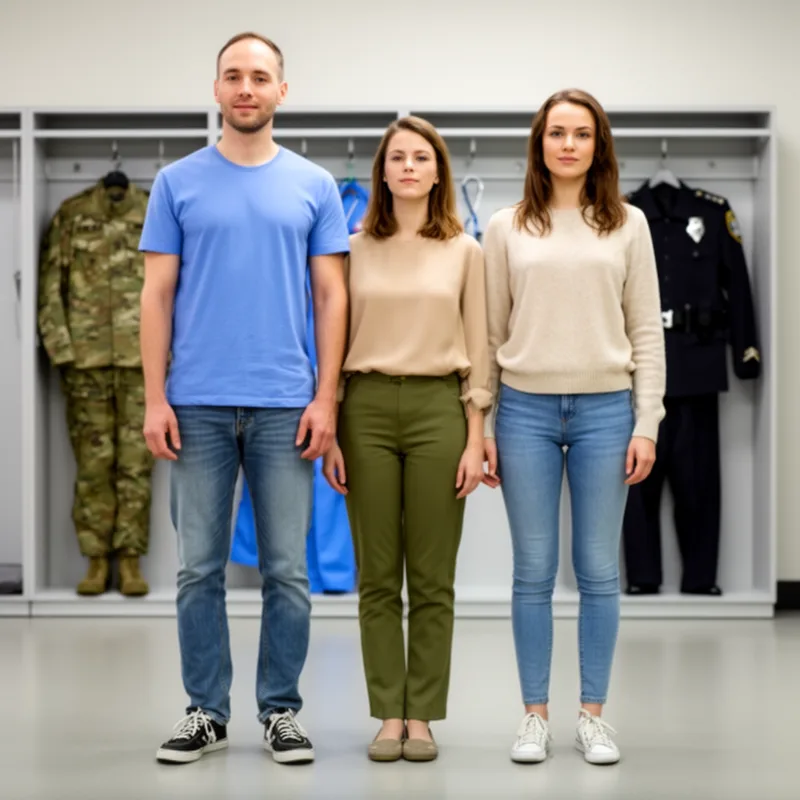
civilian garb
- noun
- /sɪˈvɪljən ɡɑrb/
 :
ropa civil
:
ropa civil
- Worf looked back over his shoulder and saw the two women in civilian garb, grimacing at the sight of Ben Zoma.
Examples
-
After returning from deployment, she enjoyed wearing civilian garb on her days off.
-
No civilian garb will hold up if we toil away like that every weekend.
Fiction book (1996) -
With the thorough intermingling of insurgents and civilians since then, the increasing frequency of attacks on U.S. troops by individuals in civilian garb or civilian vehicles, and the insurgents' intentional use of civilians and civilian objects as shields, the landscape has become increasingly confused.
Academic text (2006) -
He wore ordinary civilian garb instead of his military uniform during the parade.
-
The workers were in civilian garb when they joined the public demonstration.
Synonyms

 8
1.8
8
1.8

Everyday clothes you wear in public, not a uniform
 5
3.2
5
3.2
Ordinary clothes that let people in uniform blend in
 1
2.0
1
2.0
Clothes that people who are not in the military or police wear


 1
3.6
1
3.6
Ordinary clothes worn by people who are not soldiers, police, or religious leaders

Clothes people wear when they are not in uniform

Clothes that are not a uniform, like jeans and a T-shirt

Everyday clothes worn by someone who usually wears a uniform

Ordinary clothes worn instead of a uniform to avoid being recognized as a police officer
Antonyms

Surface Forms
Morphology
The meaning is directly and compositionally derived from 'civilian' (a non-military person) + 'garb' (clothing), so a learner who knows both words will readily infer it refers to non-uniform or ordinary clothing. This straightforward adjective+noun pattern is cross-linguistically common and follows regular English modification, making it transparent to B1 learners.
Etymology
Civilian garb comes from the image of a soldier or officer taking off a uniform and putting on plain clothes to blend in, with civilian meaning a person not in the army and garb meaning clothes. That's why it now means 'ordinary clothing' rather than a uniform or official dress.