
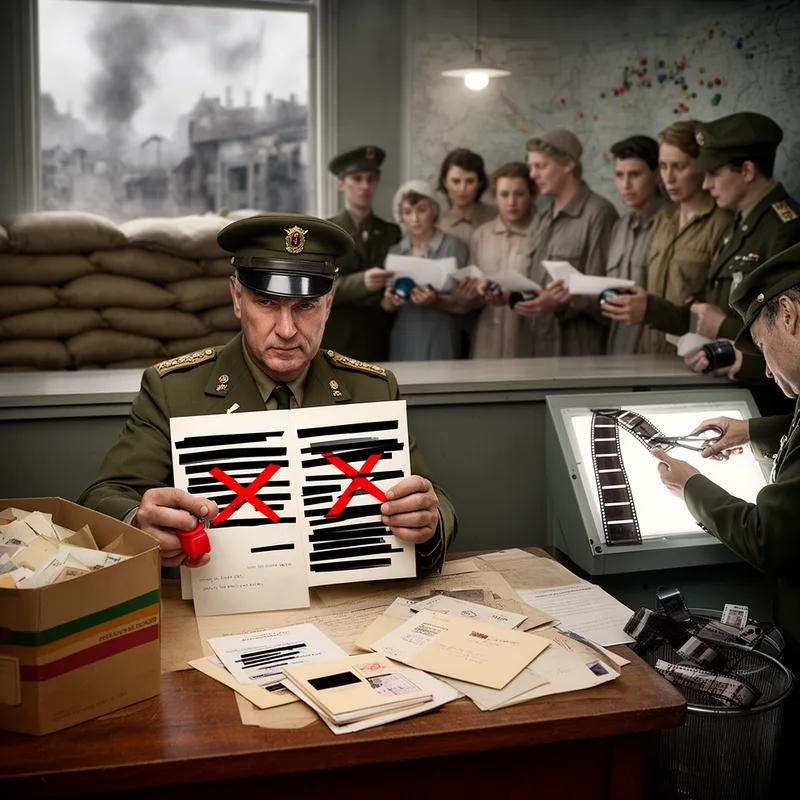
civil censorship
- noun
- /ˈsɪvəl ˈsɛn.sər.ʃɪp/
- Formal
- Letters sent from occupied territories were often subject to civil censorship by the governing military authorities.
Examples
-
During wartime, civil censorship ensured that sensitive information did not reach enemy hands.
-
Many journalists opposed civil censorship in war zones.
-
The presence of civil censorship made it difficult for people to communicate freely across borders.
-
The government imposed civil censorship during the conflict.
-
During wartime, civil censorship restricted communications to prevent the enemy from gaining valuable intelligence.
-
Letters sent from conflict zones were often examined under civil censorship to ensure that sensitive information was not leaked.
-
The implementation of civil censorship created significant barriers for civilians trying to share news and personal messages.
Synonyms
 119
4.8
119
4.8

A system that removes parts of books, films or news that people find harmful

 1
6.1
1
6.1
People in the military check and stop news or messages to protect operations
Surface Forms
Morphology
The noun phrase is transparently compositional: 'civil' (relating to ordinary citizens/public affairs) + 'censorship' (restriction or examination of information) yields the meaning 'censorship applied to civilian communications or the civil sphere'. This is a straightforward, cross-linguistically common combination that a B1 learner who knows both constituents can readily understand.
Etymology
The noun civil censorship comes from the image of people in charge opening and cutting letters, newspapers, or films sent by 'ordinary people'. The word civil points to 'ordinary people' and censorship to checking and removing parts, so the phrase means 'checking and limiting what ordinary people can send or say'.