

chronometer
 5
8.6
5
8.6

- noun
- /krəˈnɑːmətər/
- Specialized
- Decades later, John Harrison of London solved the problem by creating the marine chronometer, a low-friction timepiece resistant to changes in temperature.
- marine chronometer
- Internal chronometer
- wrist chronometer
Examples
-
To plot an exact position, you need three things: a sextant, an accurate chronometer and a celestial almanac.
-
John Harrison solved this problem with a seaworthy clock called the chronometer.
Academic text (2003) -
And the challenge was to build a chronometer or a watch.
-
A few months into the trip, the chronometer stopped.
Academic text (2002) -
I simply need to purchase a chronometer.
-
This chronometer keeps the exact time in London.
-
According to my wrist chronometer, it's well past midnight.
-
The chronometer shows a lapse of nearly two hours.
-
PHOTOS (COLOR): Meriwether Lewis (left) and William Clark used a chronometer during their expedition across the Louisiana Purchase.
Academic text (2002) -
To plot an exact position, you need three things: a sextant, an accurate chronometer and a celestial almanac.
Synonyms
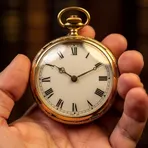 17
4.5
17
4.5
A thing like a clock or watch that shows the time
 5
4.3
5
4.3
A very accurate clock that uses atoms to measure time
 1
4.2
1
4.2
A clock or watch that measures time accurately
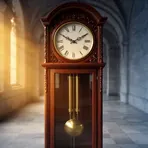
A thing that shows the time, like a clock or watch
How Accurate
- Specialized
5
4.3

- Specialized
5
8.6
∞
1.0
22
1.0
11
4.9
Surface Forms
Morphology
chronometer = chrono + meter
The structure time + measuring device is clear, but the word denotes a specialized highly accurate clock rather than any ordinary meter-like instrument.
Etymology
The word chronometer comes from Greek roots chron- meaning 'time' and -meter meaning 'measure', like the meter in thermometer. So a chronometer is an instrument that 'measures time' very accurately, which is why sailors and scientists use it.