
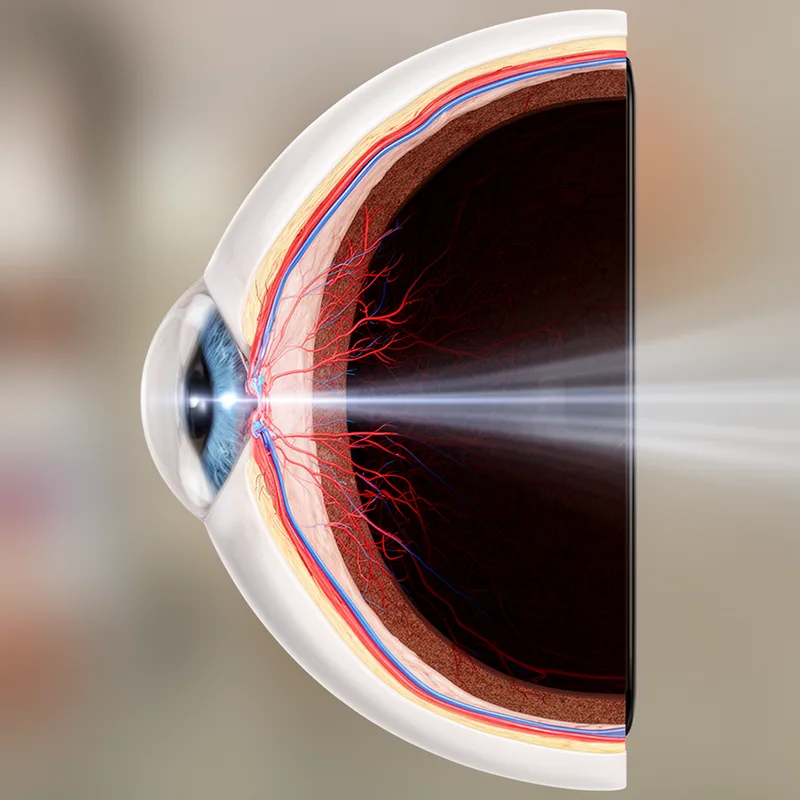
choroid coat
- noun
- /ˈkɔːrɔɪd koʊt/
- Specialized
- The dark pigment in the choroid coat helps to prevent light from scattering within the eye.
Examples
-
The choroid coat supplies blood and nutrients to the outer layers of the retina.
-
Damage to the choroid coat can impair vision and lead to various eye disorders.
-
Damage to the choroid coat can impair vision and cause eye disorders.
-
The choroid coat helps maintain the health of the retina.
-
Did you know that the choroid coat is rich in blood vessels?
-
The choroid coat supplies essential blood and nutrients to the retina's outer layers.
-
The dark pigment found in the choroid coat helps prevent light scattering inside the eye.
Synonyms
A layer behind the retina with many blood vessels and dark pigment that feeds the retina
Surface Forms
Morphology
The compound is fully compositional: 'choroid' denotes a vascular layer in the eye and 'coat' denotes a thin covering or layer, so a learner who knows both constituents can infer it refers to a layer/coating (the choroid) of the eye. This follows standard anatomical noun + layer naming patterns, making the meaning predictable even though the term is technical.
Etymology
Choroid coat: The name comes from calling the dark middle layer of the eye a 'coat' that covers the inside; choroid is a word for a skin-like layer and coat shows it lies over the light-sensing part. So the picture of a dark 'coat' explains why it is the layer that brings blood and helps stop light from bouncing around inside the eye.

