

chemoreception
- noun
- /ˌkiːmoʊrɪˈsɛpʃən/
- Specialized
- They also have a naso-labial groove that is lined with glands to help the animal with chemoreception—that is, with its sense of smell.
Examples
-
Their styles of hunting rely on acute vision and extremely sensitive chemoreception to cover what are typically huge areas relative to their size.
Academic text (2003) -
Whether prandial lacrimal ebullition is a mere epiphenomenon (e.g., a result of anatomic construction) or serves a function in chemoreception or lubrication remains to be determined.
Academic text (2007) -
Many insects rely on chemoreception to find food and mates in their environment.
-
The fish uses chemoreception to detect predators and locate prey in the water.
-
Humans also utilize chemoreception when they smell food cooking, which triggers hunger.
Synonyms
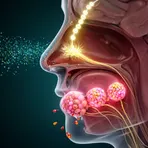
How easily cells or nerves react to chemicals like smells and tastes
How Sensitive
 5
7.0
5
7.0


- Specialized
- Specialized
- Specialized
15
4.2
16
5.5
Surface Forms
Morphology
chemoreception = reception (semi-transparent) = chemo + reception + chemo
The meaning can be inferred from 'chemo-' (chemical) + 'reception' (receiving), but 'chemo-' is a technical combining form and 'reception' here has a specialized biological sense, so it may not be fully transparent to an average B1 learner.
Etymology
Chemoreception comes from the parts chemo- meaning 'chemical' and reception meaning 'receiving', as in the common word chemical. So chemoreception is about 'receiving chemical' signals — it describes how cells or animals notice and respond to chemicals in their body or environment.