
chemokine
 1
7.8
1
7.8

- noun
- /ˈkiːmoʊˌkaɪn/
- Specialized
- Astrocytes also play important roles in controlling immune cell trafficking and activation through the secretion of cytokines and chemokines, as well as acting as antigen-presenting cells.
- chemokine receptor
- expression of chemokine
Examples
-
The expression of similar transcription factors between effector T cells and Treg cells is thought to lead to the expression of similar chemokine receptors, allowing colocalization and more effective regulation.
Academic text (2016) -
Their precursors come from the bone marrow and are lured into the thymus by chemical attractants called chemokines.
Blog text (9) -
The magenta is the chemokine, the blue and the green space filled parts are actually what holds the chemokine.
-
And so it's a receptor normally for these chemokines, but it is also a receptor for the for the virus.
-
IL-18 further promotes synovial chemokine synthesis and angiogenesis.
Blog text (17) -
In addition, the cytokines and chemokines released by those stimulations were screened in supernatants.
Academic text (2018) -
IL-17 also induces several chemokines responsible for the attraction of autoreactive T cells and macrophages at the site of inflammation 127.
Blog text (17) -
When the viral protein gp120 binds to both a CD4 molecule and a chemokine receptor, and gp41 binds to the fusion domain, a "door" to the target cell swings open.
Academic text (2005) -
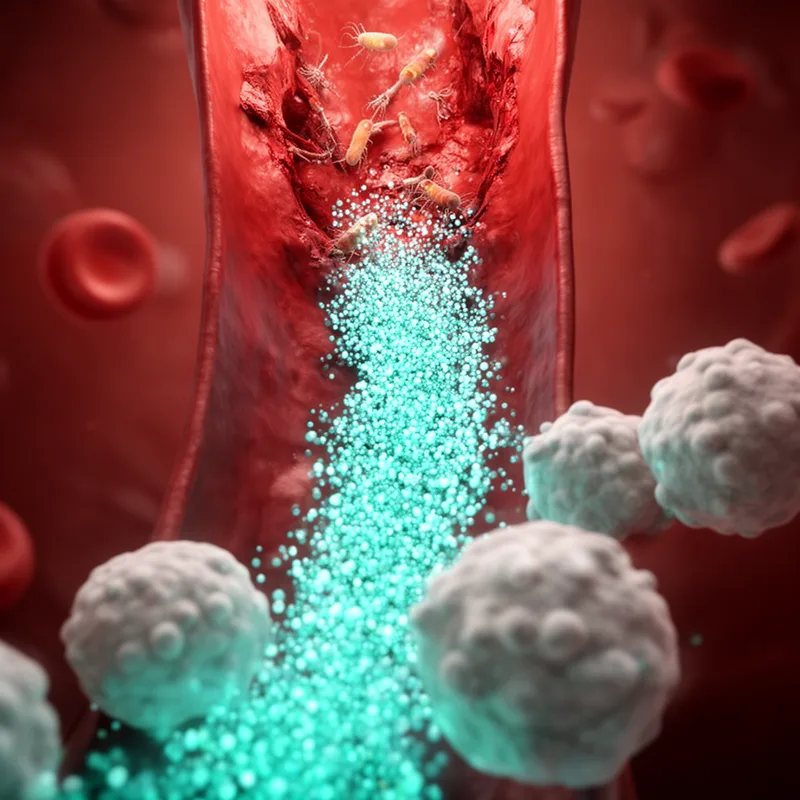
Chemokines are essential chemokine proteins that guide immune cells to areas of infection in the body.
-
The release of chemokines helps to attract white blood cells to the site of injury to initiate healing.
Surface Forms
Morphology
chemokine = cytokine (opaque) = chemo + kine
The formation is a technical biomedical blend (chemo- + the '-kine' element from 'cytokine'); '-kine' is not a familiar standalone morpheme, so the meaning cannot be reliably derived by general learners.
Etymology
Chemokine is made of the parts chemo- 'chemical' and -kine 'to move', the same root you see in kinetic. So a chemokine is like a 'chemical mover' that attracts and guides white blood cells to infections or injuries.