
chemical operations
- noun
- /ˈkɛmɪkəl ˌɑpəˈreɪʃənz/
- NSFW
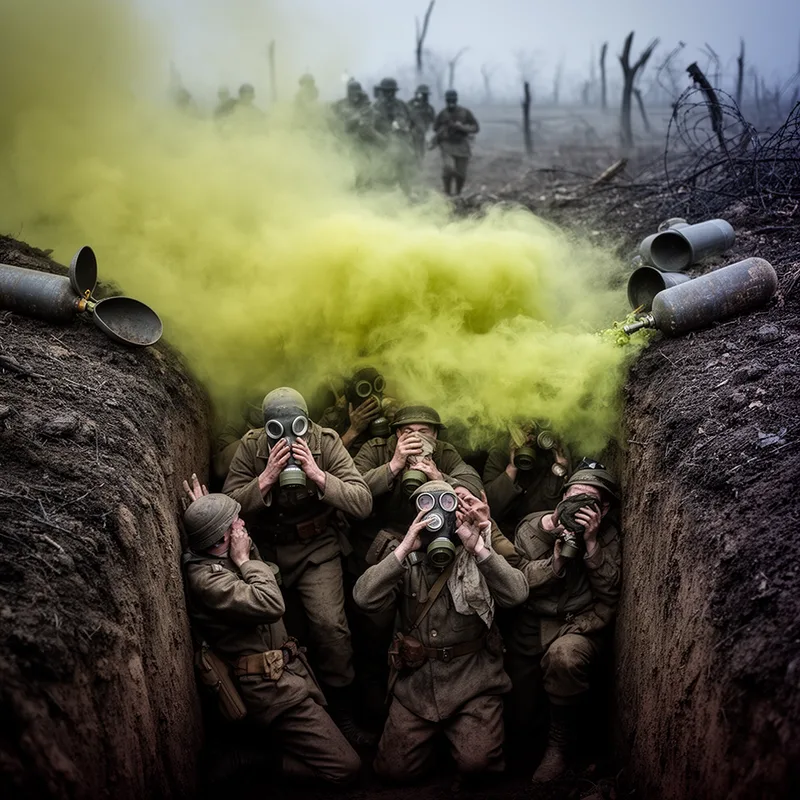
- During World War I, chemical operations caused widespread casualties among soldiers on both sides.
Examples
-
Concerns about chemical operations have led to strict arms control agreements worldwide.
-
The army conducted several chemical operations during the conflict.
-
The international community condemned the use of chemical operations in the conflict.
-
Are chemical operations a violation of international law?
-
During World War I, chemical operations led to devastating effects on soldiers, resulting in numerous casualties.
-
The military's deployment of chemical operations during the conflict raised serious ethical concerns.
-
Experts argue that chemical operations pose significant risks to both combatants and civilians in warzones.
Synonyms

 12
5.6
12
5.6

The use of poisonous chemicals as weapons to kill or hurt people
Surface Forms
Morphology
The meaning is compositionally built: 'chemical' specifies the kind of 'operations', so a learner who knows both words can infer operations involving chemical agents. Although detailed legal or weaponization connotations require background knowledge, the basic referent (operations using chemicals) is directly derivable from the constituents.
Etymology
Chemical operations comes from combining chemical (dangerous gases or liquids) and operations (planned military actions). Imagine soldiers planning to use barrels of poison gas or a cloud of gas in an attack, and that's why the phrase means 'military actions using chemical agents'.