
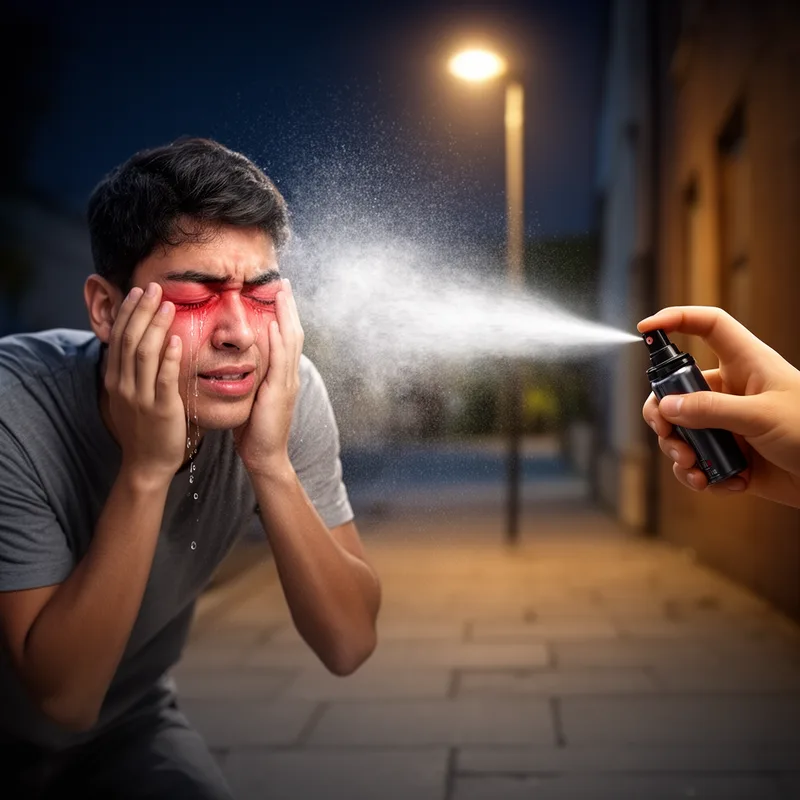
chemical mace
- noun
- /ˈkɛmɪkəl meɪs/
- US
- She carried a canister of chemical mace for her protection while walking alone at night.
Examples
-
The store security guard used chemical mace to disperse the unruly crowd during the protest.
-
He decided to purchase chemical mace as a precaution against potential threats in the city.
-
The Cuban took their guns, chemical mace, and car keys, went out yelling into the street, got the shotgun from the trunk of their cruiser, then retreated back into the building with his wife and daughter up to the seventh floor, where he took over.
Fiction book (1995)
Synonyms
 31
3.5
31
3.5

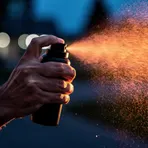
A small can of strong liquid that makes your eyes burn to stop people or animals
 29
7.6
29
7.6
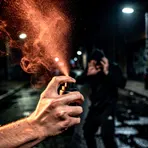
A spray used to protect yourself that makes someone's eyes sting and makes them feel dizzy
Surface Forms
Morphology
The noun is compositionally built: 'Mace' here denotes the incapacitating spray and 'chemical' simply specifies its makeup, so a learner who knows both words can infer it refers to a type of spray used for self‑defense. Although 'Mace' began as a trademark, the modifier + noun construction is transparent and cross‑linguistically accessible, making the overall meaning predictable from the parts.
Etymology
Chemical mace gets its name from the old word mace, a heavy club used long ago, and the word 'chemical' to show this is a spray, not a stick. One popular story says makers chose mace to suggest a strong, stopping force, so today chemical mace means a spray that makes the eyes burn and temporarily stops someone for 'self-defense' or crowd control.