

chance variable
- noun
- /tʃæns ˈvɛrɪbəl/
- Specialized
- In statistics, a chance variable can take on different values based on random outcomes.
Examples
-
For a discrete random chance variable, we have M elements in the alphabet.
-
For each of these chance variables, W of X maps source symbols into real numbers.
-
Researchers often analyze a chance variable to model the likelihood of specific events occurring.
-
A chance variable is used to represent uncertain characteristics in a probability distribution.
Synonyms

 2
6.8
2
6.8

A number that can have different values by chance, with a known chance for each value
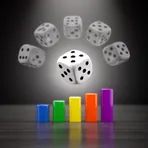
A number that can take different values by chance, for example a dice roll outcome

A number or value that can change by chance
Antonyms

Surface Forms
Morphology
The meaning 'a variable whose values are determined by chance' is directly and compositionally derived from 'chance' (likelihood) + 'variable' (an element that can assume values). This noun-noun construction parallels common expressions like 'random variable' and follows a transparent, cross-linguistically intuitive logic, so a B1 learner who knows both constituents can infer the meaning.
Etymology
Chance variable comes from the clear idea of a variable (something that can change) whose value is set by chance, like the number you get when you roll a die, and that's why a chance variable means a value that comes from 'chance' rather than being fixed.