
cerastes
- noun
- /səˈræs.tiːz/
- Specialized
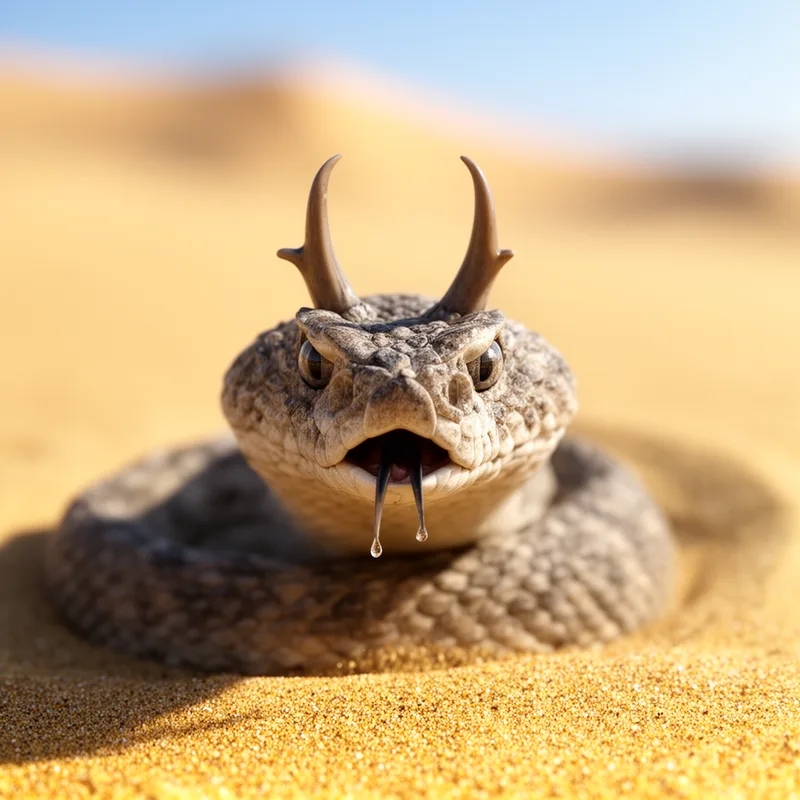
- The desert-dwelling cerastes is well adapted to its arid environment with its distinctive horn-like scales.
Examples
-
The venom of the cerastes makes it one of the most dangerous snakes in its range.
-
The cerastes is known for its distinctive horn-like structures above the eyes.
-
Researchers carefully observed a cerastes as it slithered across the sand dunes of the Sahara.
-
Have you ever seen a cerastes in the wild?
-
Researchers carefully observed a cerastes as it slithered across the sand dunes of the Sahara.
-
The venom of the cerastes makes it one of the most dangerous snakes in its range.
-
The desert-dwelling cerastes is well adapted to its arid environment with its distinctive horn-like scales.
Synonyms


 1
9.9
1
9.9
A poisonous snake from northern Africa and southwest Asia with a horn above each eye

A highly venomous viper from northern Africa and southwestern Asia with a small horn above each eye

A very poisonous snake with a small horn above each eye from northern Africa and southwestern Asia

A very venomous desert snake in North Africa and Southwest Asia with a horn above each eye
Compounds
- Specialized
A very venomous desert snake in North Africa and Southwest Asia with a horn above each eye
Surface Forms
Etymology
Cerastes comes from the Greek word keras, which means 'horn'. Because this snake has a horn-like scale above each eye, the name matches its appearance, just like the dinosaur Triceratops, which also uses the same root for 'horn'.