
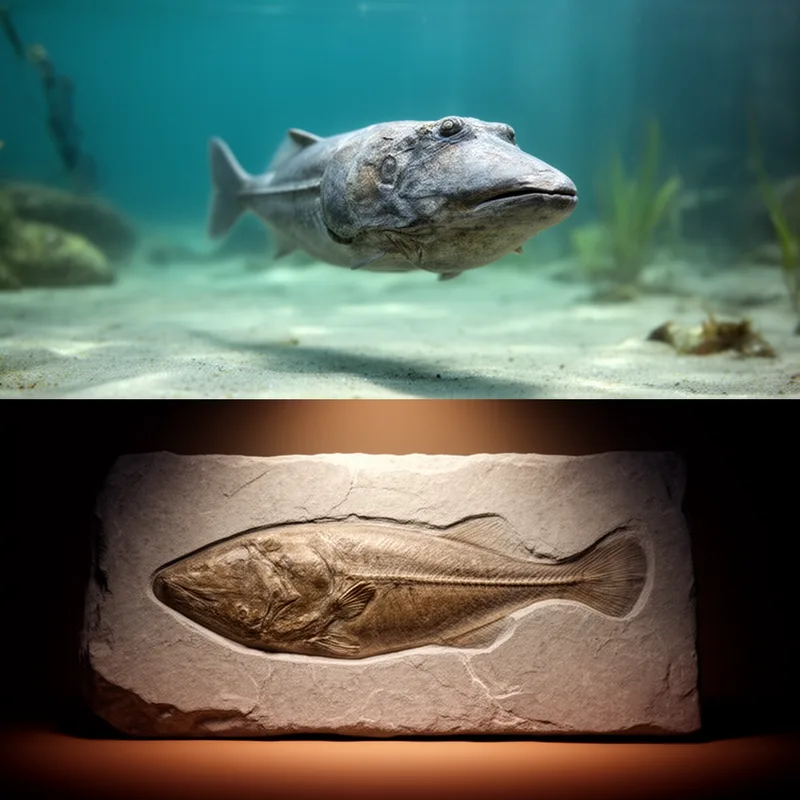
cephalaspid
- noun
- /ˌsɛfəˈlæspɪd/
- Specialized
- The cephalaspid had a flattened body and a shield-like head for protection.
Examples
-
Scientists discovered a new cephalaspid fossil in the Devonian strata of eastern Europe.
-
Many fossils of cephalaspids have been discovered in North America.
-
Fossils of cephalaspid species provide valuable information about early vertebrate evolution.
-
The cephalaspid is an intriguing example of prehistoric marine life.
-
Fossils of cephalaspid species provide valuable information about early vertebrate evolution.
-
Scientists discovered a new cephalaspid fossil in the Devonian strata of eastern Europe.
-
The cephalaspid had a flattened body and a shield-like head for protection.
Synonyms

An extinct jawless fish with a heavy armored head from the Devonian period

A fish without jaws that had heavy bony armor and lived long ago
Surface Forms
Morphology
cephalaspid = cephal + aspid
Formed from Greek combining forms ('cephal-' = head, '-aspid' = shield) used in technical taxonomic names; the parts are not productive or familiar to average B1 learners, so the meaning is not transparently inferable.
Etymology
Cephalaspid comes from Greek parts cephal- meaning 'head' and -aspid meaning 'shield', so it literally means 'head shield'. That's why the name fits an extinct jawless fish with a heavy, shield-like head for protection.

