
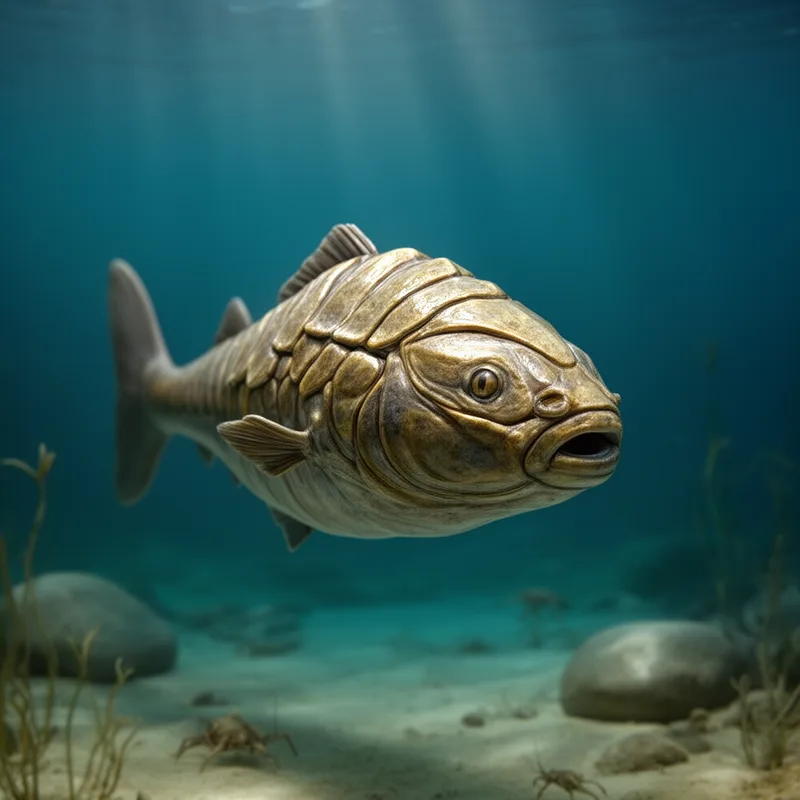
ostracoderm
- noun
- /ˈɑstrəˌkoʊdərm/
- Specialized
- Fossils of the ostracoderm reveal the presence of bony armor over most of its body.
Examples
-
Scientists believe that the extinction of the ostracoderm marked a major turning point in vertebrate evolution.
-
The museum's exhibit includes a reconstructed model of an ancient ostracoderm.
-
The ostracoderm was an important species in the Paleozoic Era.
-
Did you know that ostracoderms lived over 400 million years ago?
-
Fossils of ostracoderms reveal their heavily armored bodies, which provided protection from predators in ancient oceans.
-
Scientists study ostracoderms to learn about the evolution of vertebrates during the Paleozoic Era.
-
The discovery of ostracoderms in sedimentary rocks gives researchers insight into early fish-like organisms.
Synonyms

An extinct group of jawless animals with heavy bony shields from long ago

An extinct group of armored, jawless fish that lived a long time ago
A group of armored jawless fish that lived in ancient seas and are now extinct

Fish with hard plates and no jaws known from fossils that lived a very long time ago

An extinct group of early fish with bony head shields
An extinct jawless fish with bony plates on its head and front body that lived in the sea

An extinct jawless fish with a heavy armored head from the Devonian period
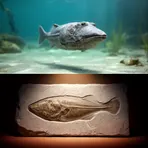
A jawless fossil fish from the Devonian with a hard shield on its head

A small extinct freshwater fish without jaws that lived long ago and had a bony head

An extinct group of jawless fish with no bony plates that lived long ago

An extinct group of jawless fish that lived hundreds of millions of years ago
Surface Forms
Morphology
ostracoderm = ostraco + derm
Formed from Greek combining elements ('ostraco-' and '-derm') that are not standalone English words, so an average B1 learner cannot derive the meaning from familiar English bases.
Etymology
Ostracoderm comes from the Greek parts ostraco- meaning 'shell' and -derm meaning 'skin', so it literally means 'shell-skin'. That's why ostracoderm is used for the ancient jawless fish that had heavy bony plates like armor over their bodies.

