
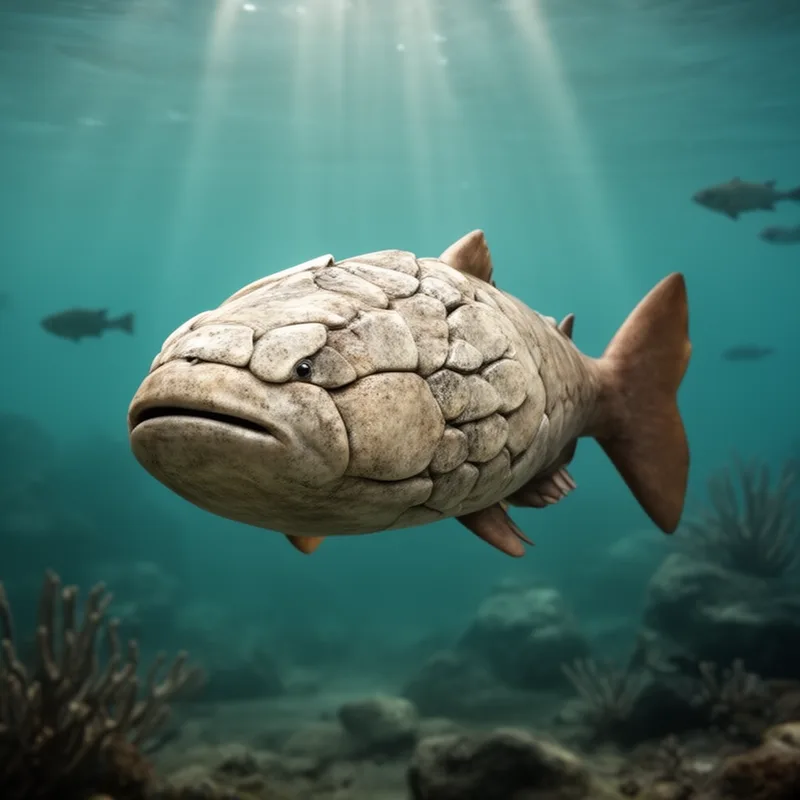
heterostracan
- noun
- /ˌhɛtəroʊˈstrækən/
- Specialized
- Fossils of the heterostracan reveal a heavily armored head and a tail adapted for swimming.
Examples
-
Many heterostracans had bony armor that protected them from predators.
-
Many museum collections feature specimens of heterostracan fishes from the Devonian period.
-
The heterostracan lineage offers insight into the early evolution of vertebrate skeletons.
-
The heterostracan fossils were discovered in a Silurian rock layer.
-
Fossils of the heterostracan reveal a heavily armored head and a tail adapted for swimming.
-
Many museum collections feature specimens of heterostracan fishes from the Devonian period.
-
The heterostracan lineage offers insight into the early evolution of vertebrate skeletons.
Synonyms
A group of armored jawless fish that lived in ancient seas and are now extinct

Fish with hard plates and no jaws known from fossils that lived a very long time ago

An extinct group of jawless animals with heavy bony shields from long ago
Surface Forms
Morphology
heterostracan = ostracan (semi-transparent) = hetero + ostracan
Formed from Greek combining elements 'hetero-' (different) + 'ostracan' (shell/armored fish); the parts are classical and technical, so a general learner may only partially recognize 'hetero' but not 'ostracan'.
Etymology
Heterostracan comes from the Greek parts hetero- 'different' and ostracon 'shell'. So the name paints a simple picture of a fish covered with different bony 'shells' or plates, which is why it is used for these extinct, jawless fishes.

