
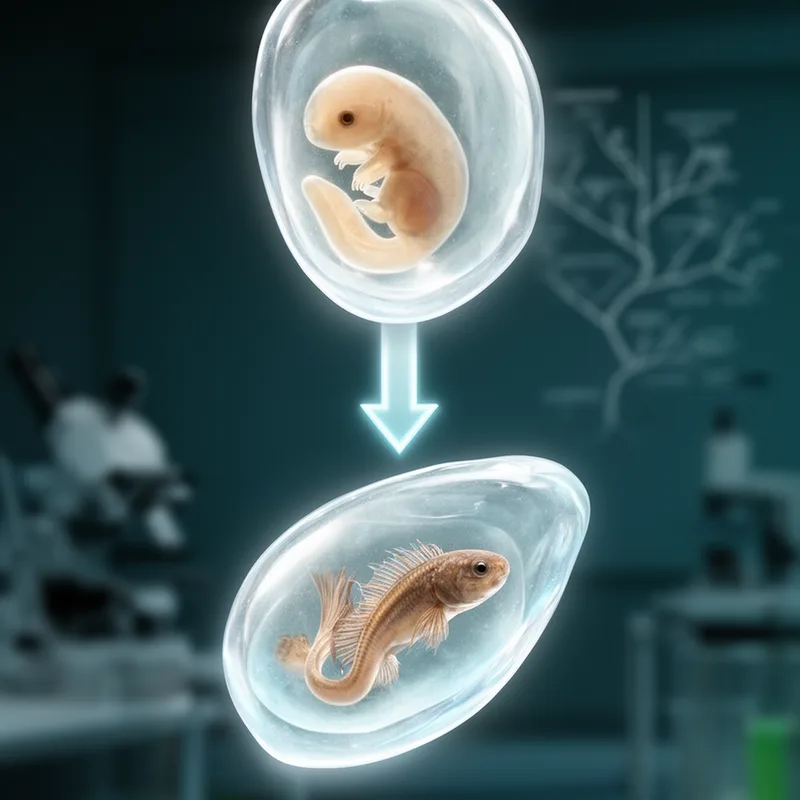
cenogenetic
- adjective
- /ˌsiːnoʊdʒəˈnɛtɪk/
- Specialized
- The cenogenetic features in the embryo are adaptations not seen in ancestral species.
Examples
-
Many fish species develop cenogenetic structures during their larval stage.
-
Some evolutionary changes are best understood by studying the cenogenetic aspects of embryology.
-
The study focused on cenogenetic changes in embryonic development.
-
Cenogenetic traits are fascinating!
-
The cenogenetic traits observed in the developing embryo highlight adaptations that differ from those of its ancestors.
-
Researchers noted that certain species exhibit cenogenetic characteristics during embryonic growth that are not found in parent forms.
-
Studying the cenogenetic aspects of development reveals how animals can evolve new features in response to their environments.
Synonyms

New body parts that develop while an embryo grows but were not in its ancestors

A development in an embryo when it makes new body parts not seen in earlier members of the species

The development of new body parts or traits in an embryo that ancestors do not have
Surface Forms
Morphology
Etymology
Cenogenetic combines the part ceno- meaning 'new' and -genetic about 'birth' or origin, the same idea you see in genetic and generation. So, cenogenetic describes traits that appear newly in an embryo rather than being passed down from ancestors.

