
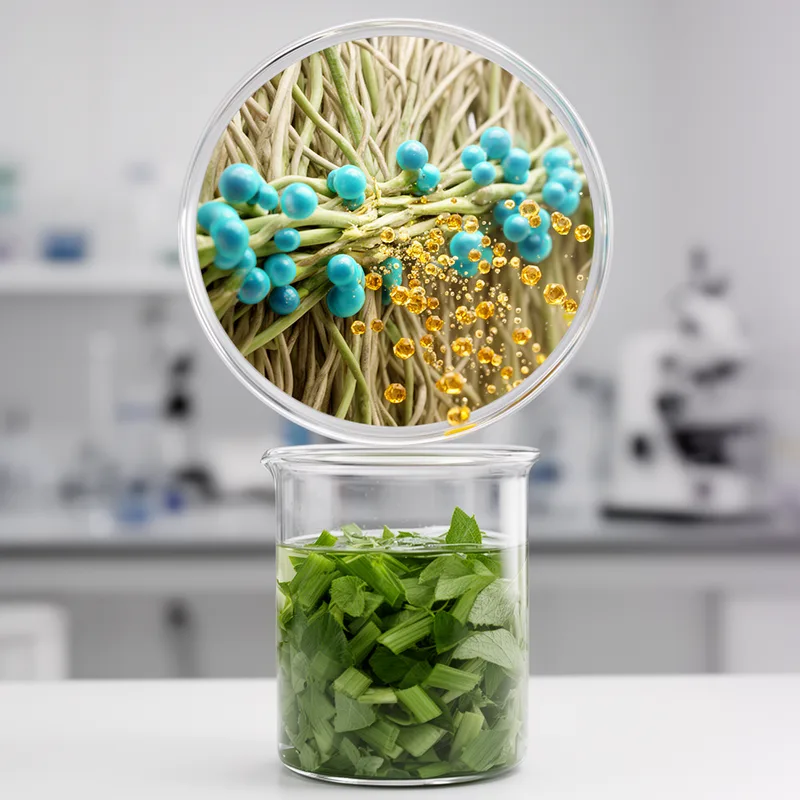
cellulase


 1
7.0
- noun
- /ˈsɛljʊleɪs/
- Specialized
- In agriculture, cellulase is used to improve the bioavailability of nutrients in animal feed.
- cellulase and other enzymes
Examples
-
The process of converting plant biomass into ethanol involves the action of cellulase to degrade cellulose.
-
And then you can move forward and look at things like it's not just the cellulase bit, right?
-
Additives also often include added enzymes such as proteases, amylases, lipases, and cellulase (Scow).
Academic text (2008) -
In response to the hormone ethylene, these cells churn out cellulase and other enzymes that biochemically snip off flowers, leaves, fruit, stems, or seeds.
Academic text (1996) -
Goynes and Blanchard explored whether enzymes such as cellulase can modify undeveloped fibers to improve fabric dyeability.
Academic text (1997) -
First, they quickly hydrolyzed the fiber with hot, mild acid; then they quickly cooled it and added a mixture of cellulase and amyloglucosidase enzymes before further hydrolysis.
Academic text (1996) -
PHOTO (COLOR): In response to the hormone ethylene, plant cells churn out cellulase and other enzymes that biochemically snip off flowers, leaves, fruit, stems, or seeds.
Academic text (1996) -
Cellulase is an enzyme that helps break down cellulose into simple sugars during digestion.
Synonyms
 1
8.9
A protein that breaks down complex sugars into simple sugars for digestion
Surface Forms
Morphology
cellulase = cellulose (semi-transparent) = cellul + ase
The connection to 'cellulose' is clear, but the specialized scientific suffix '-ase' and the form adjustment make the meaning not fully obvious to a typical learner.
Etymology
Cellulase comes from cellulose (the strong plant fiber found in cells) plus the ending -ase, which means 'enzyme'. So, think of cell as a 'small room' full of fiber and remember that cellulase is the 'enzyme' that breaks those plant fibers into simple sugars.