

to cavort
 12
7.7
12
7.7

- verb
- /kəˈvɔrt/
- After winning the game, the players cavorted joyfully on the field, celebrating their victory.
- see cavorting
Loading YouTube…
Watch on YouTubeWho wouldn't want to see a Sama cavorting down the streets armed with nothing but the thirst for infidel blood and a rainbow thong?
- Who wouldn't want to see a Sama cavorting down the streets armed with nothing but the thirst for infidel blood and a rainbow thong?
Examples
-
In this scene, humans are shown cavorting, singing, working, crying, and even carrying out sacrifices.
Academic text (2005) -
I can now see two children emerging from behind the hedges and cavorting in the snow near the snowman.
Fiction book (1996) -
Suddenly, the air is filled with the sounds of people cavorting in the pool.
Fiction book (1998) -
From our boat, I saw cavorting dolphins occasionally breaking the surface of the water.
Academic text (2004) -
I am too old to be cavorting around the dancefloor with a girl half my age.
-
At last, in the moonlight, she saw the dogs coming, their shadows cavorting on the snow.
Fiction book (1999) -
Christopher Columbus is said to have reported sighting them cavorting off the coast of Hispaniola in 1493!
Academic text (1996) -
Waving pitchforks and wearing regulation umpires' uniforms, they cavorted along the baselines with hellish glee.
Fiction book (1994) -
The children cavorted in the garden, laughing and chasing each other under the warm sun.
-
At the festival, people cavorted together, dancing and singing to the lively music.
Synonyms
 217
1.1
217
1.1
To play and move quickly in different directions while making noise
 39
2.7
39
2.7
To play or move around in a lively, cheerful way
 22
3.2
22
3.2
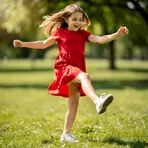
To move quickly with small, light, playful steps
 15
4.1
15
4.1
To move with high, lively steps in a playful way
 8
2.8
8
2.8
To run and play in a lively, energetic way
 8
3.3
8
3.3
To play and move about happily
 4
7.3
4
7.3
To play and move in a loud, happy way
 3
5.1
3
5.1
To jump or skip around in a lively, playful way
 3
4.4
3
4.4
To move in a happy, lively way, often by jumping or skipping
 2
7.4
2
7.4
To play in a lively, carefree way
 1
8.0
1
8.0
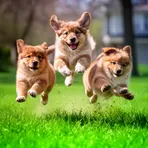
To run or jump playfully with a lot of energy
 1
9.6
1
9.6
To enjoy yourself by behaving in a lively, playful way


 1
8.1
1
8.1
To play and joke in a silly way and sometimes cause trouble
 1
9.9
1
9.9
To dance in a joyful, energetic way

To play and run around in a lively carefree way
Antonyms

How Playful

Surface Forms
Etymology
Cavort probably comes from older words meaning 'to leap' or 'to prance' and is like the English word caper. So picture someone happily jumping and playing like a goat — that image helps explain why cavort means to move around in a lively, playful way.