

to scamper
 23
3.2

- verb
- /ˈskæmpər/
- The puppy loves to scamper around the yard chasing after butterflies.
- scampered away
- scampered back
- a dog scampering
Loading YouTube…
Watch on YouTubeI would sort of scamper in there, you know, and put down a few of my little tracks and then clear out before they came back.
- I would sort of scamper in there, you know, and put down a few of my little tracks and then clear out before they came back.
- So scampered back up the north side of the valley, got up.
- So we just kind of, we just kind of explain the misunderstanding just like slowly scampered out there like namaste, namaste.
- The cameras shuffling off this mortal Carl is no excuse in my book for scampering when it's time to put the bill, dead or alive, it's sheer bad manners.
Examples
-
A squirrel scampers through the dead leaves.
-
Nadine grabbed the paper and the money and scampered down the steps.
Fiction book (1994) -
Okay, scamper on back to the woods, little buddy.
-
But... I think I'd rather see you scamper on your wheel.
-
Who is that scampering around my house?
-
Anna thanks her without being prompted and scampers into the living room with the small package.
Fiction book (1992) -
After the FotoMat was destroyed, the bear scampered back into the woods.
-
When she was a little girl, Kicva would scamper away, shrieking with laughter.
Fiction book (1992) -
The old man released both boys, who promptly went scampering out into the market square, tripping several villagers.
Fiction book (1993) -
From our deck, we watched hawks diving at mice as they scampered for shelter on the bare hillsides.
Fiction book (1994)
Synonyms
 72
2.8
Move a short distance quickly, often to make room or hurry
 48
3.1
To move quickly with short, hurried steps because you feel afraid or rushed
 18
4.1
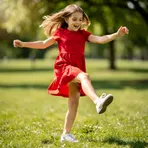
To move with high, lively steps in a playful way
 18
5.5
To move quickly with short hurried steps, often to hide or escape
 14
6.1
To move lightly and quickly, often in short quick steps like a leaf or small animal
 13
7.7
To jump and move around in a playful, excited way
 2
2.7
To move quickly in one direction
 1
7.7
To move quickly on foot
 1
5.8
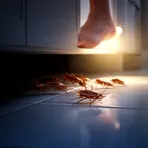
To move quickly and lightly away, often because something scares you
 1
9.0
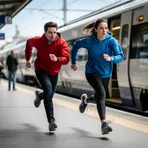
Move quickly on foot to escape or reach a place fast
 1
5.2
To move quickly with short, hurried steps because of fear
 1
8.4
To go away quickly because you are in a hurry
 1
8.2
To move quickly with short, hurried steps when you feel nervous
Antonyms

How Fast

Surface Forms
Etymology
Scamper probably comes from a Scots dialect word skamper or from the little sound of quick feet, like 'scurry' or 'skitter'. A helpful image is small animals or children making fast, light steps, which is why scamper means 'to move quickly and playfully'.