
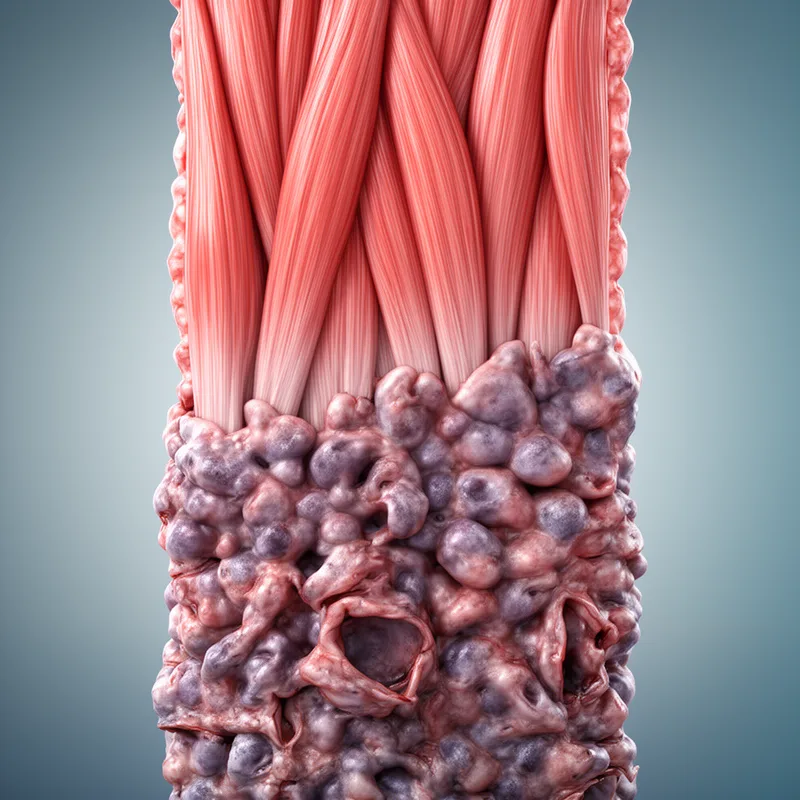
cataplastic
- adjective
- Specialized
- The cataplastic changes observed in these cells indicate a degenerative process.
Examples
-
Researchers focused on the cataplastic degeneration occurring in aging muscle fibers.
-
The cataplastic changes in the tissue were evident under the microscope.
-
Certain diseases may have a cataplastic effect on tissue, causing it to lose specialized functions.
-
Is this condition cataplastic in nature?
-
Certain diseases may have a cataplastic effect on tissue, causing it to lose specialized functions.
-
Researchers noted the cataplastic degeneration in cells as they studied the effects of aging.
-
The cataplastic changes in these tissues suggest significant loss of function due to injury.
Synonyms
Cells that have lost their usual shape and work and act more like simple cells
Surface Forms
Morphology
cataplastic = cataplasia (semi-transparent) = cata + plastic
Formed from the noun 'cataplasia' by a regular adjectival formation (adding '-ic'), but the base term is specialized medical vocabulary unfamiliar to average learners.
Etymology
The word cataplastic comes from Greek parts cata- meaning 'down' and -plastic meaning 'to form', the same root as plastic which means 'shapeable'. So cataplastic describes a 'breaking down of form' in cells or tissue, which is why it is used for loss of special form or function.

