
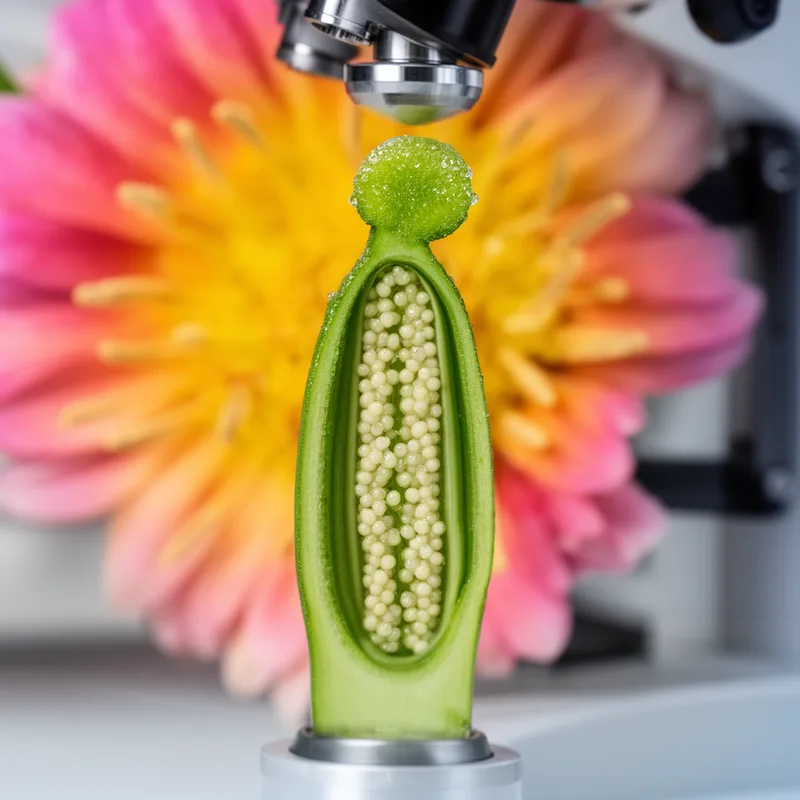
carpel
- noun
- /ˈkɑːrpəl/
- Specialized
- During the pollination process, the pollen grain lands on the carpel's stigma, initiating fertilization.
- stamens and carpels
- petals, stamens, and carpels
Examples
-
The genes that act in a given whorl of a floral meristem determine which kind of organ (sepal, petal, stamen, or carpel) the whorl grows into.
Academic text (2006) -
When an A gene called APETALA1 (AP1 for short) is experimentally inactivated, stamens and carpels form normally.
Academic text (2006) -
Recently, another set of genes was identified that is necessary for the growth of petals, stamens, and carpels: genes with the so-called function E.
Academic text (2006) -
Later, in the developing floral meristem, B, C, and E genes kick in to make petals, stamens, and carpels.
Academic text (2006) -
Thus, A genes form sepals, A and B genes together form petals, B and C genes together form stamens, and C genes form carpels. See diagram on page 39.
Academic text (2006) -
Flowers with several sets of petals instead of stamens and carpels, such as cultivated roses, are thought to result from a mutation that makes C genes inactive.
Academic text (2006) -
The name comes from the three roles (called A, B, and C) that genes are thought to play in directing how the mass of floral-meristem cells grows and specializes into sepals, petals, stamens, and carpels.
Academic text (2006) -
In flowering plants, the carpel is essential for reproduction as it houses the ovary and stigma.
-
A single flower may have multiple carpels that combine to form a pistil, which is vital for seed development.
Synonyms
 2
7.7
2
7.7

The part of a flower that receives pollen and makes seeds

The part of a flower that has only one section that makes seeds
Surface Forms
Etymology
Carpel comes from the Greek root karpos, meaning 'fruit'. A carpel is the part of a flower that holds the ovules and later becomes the fruit, so the name helps you remember it is the flower's 'fruit-making' part.