
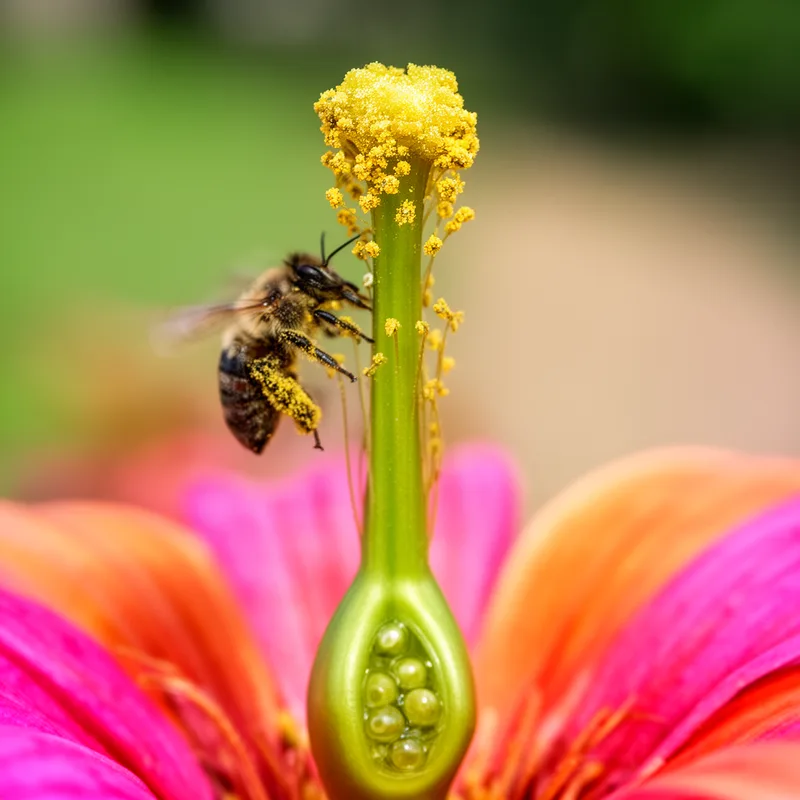
pistil
 2
7.7
2
7.7

- noun
- /ˈpɪstɪl/
- Specialized
- First, Linnaeus classified flowering plants according to the number of stamens and pistils, the male and female parts, in each flower.
- stamens and pistils
- pistil in each flower
- pistils as female
Examples
-
In many flowering plants, the pistil consists of the ovary, style, and stigma, which work together for reproduction.
-
Do you know that, in certain willows, pistils and stamens can sometimes change into each other?
Fiction book (1999) -
Or that pistils often turn into petals in cultivated flowers?
Fiction book (1999) -
Pollination is the transfer of pollen from the male reproductive organ stamen to the female reproductive organ, the pistil?
-
Next to it, a plastic model the size of a school bus showed the pistil and stamens of an archetypical flower, accompanied by a softly buzzing mechanical bee suspended from wires.
Fiction book (1999) -
The pistil is the central part of the flower, responsible for producing seeds after fertilization.
-
The pistil receives pollen during pollination, enabling the development of fruit and seeds.
Synonyms
The female part of a flower that makes seeds
Compounds
Surface Forms
Etymology
Pistil comes from the Latin pistillum, which means 'pestle', the small tool used with a mortar. Think of the pistil as a little pestle that receives pollen and helps make seeds, so its name fits its job as the flower's female part.