
carboxyhemoglobin
 2
9.1

- noun
- /kɑrˌbɑk.siˈhiː.məˌɡloʊ.bɪn/
- Specialized
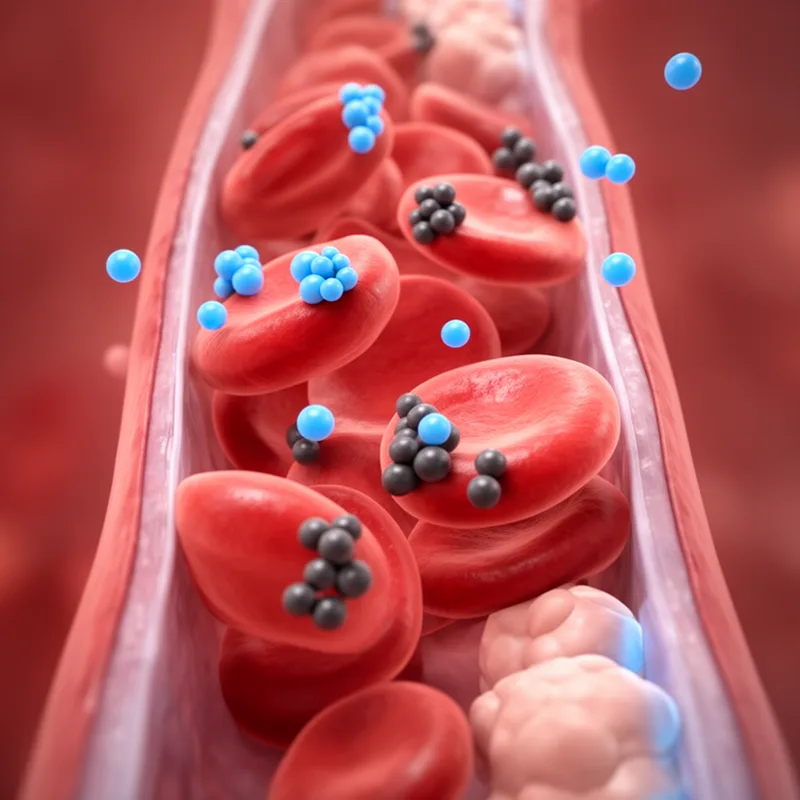
- When carbon monoxide is inhaled, it forms carboxyhemoglobin, preventing the blood from carrying oxygen effectively.
- carboxyhemoglobin levels
- ABG with carboxyhemoglobin
Examples
-
First off, he came back negative for carboxyhemoglobin.
-
At that level, the players may well have had carboxyhemoglobin levels of 10 percent, high enough to produce clinical symptoms.
Academic text (1993) -
Doctors can measure carboxyhemoglobin levels to assess the severity of carbon monoxide poisoning.
-
A high concentration of carboxyhemoglobin in the blood can lead to symptoms such as headache and dizziness.
Synonyms

 1
9.9
A part of blood that cannot carry oxygen well because its iron is changed
Surface Forms
Morphology
carboxyhemoglobin = hemoglobin (semi-transparent) = carboxy + hemoglobin
The prefix 'carboxy-' is a specialized combining form indicating binding with carbon monoxide, so learners who know 'hemoglobin' may not infer the specific CO-binding meaning without biomedical knowledge.
Etymology
Carboxyhemoglobin breaks into carboxy- ('carbon', as in 'carbon monoxide') and hemoglobin ('blood protein that carries oxygen'), so the name means hemoglobin with carbon attached. So carboxyhemoglobin cannot carry oxygen well, which is why it is central to carbon monoxide poisoning.